
Pet Retail Buyers Guide to Travel Carrier Sourcing
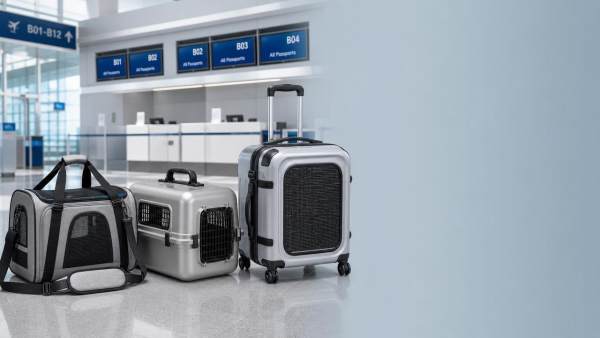
For pet retail buyers, sourcing the right travel carriers means balancing safety, compliance, design, and margin in a fast-moving market. This guide explores how to evaluate suppliers, compare OEM and private-label options, and identify products that meet consumer expectations while supporting resilient, profitable retail growth.
Why travel carrier sourcing has become a strategic issue for pet retail buyers
Travel carriers are no longer a simple accessory category. They sit at the intersection of pet safety, consumer convenience, airline and mobility expectations, and seasonal demand tied to holidays, relocation, and weekend travel.
For pet retail buyers in travel service-adjacent retail, the challenge is sharper. A carrier must look consumer-friendly on the shelf, survive frequent use, and avoid compliance or quality failures that damage brand reputation.
This is where structured sourcing matters. Global Consumer Sourcing helps procurement teams move beyond price comparison by focusing on supply resilience, product-market fit, certification readiness, and realistic private-label execution.
- Demand is fragmented across cabin travel, car travel, rail journeys, hotel stays, and short urban trips.
- Consumers expect breathable materials, easy cleaning, compact storage, and reassuring structural support.
- Retailers need margin protection while avoiding overspecification that raises landed cost without improving sell-through.
Which travel carrier types fit different retail and travel service scenarios?
Not every carrier should be sourced for every sales channel. Pet retail buyers should map product type to end-use behavior, customer profile, and destination-related constraints before negotiating with manufacturers.
Core product formats to evaluate
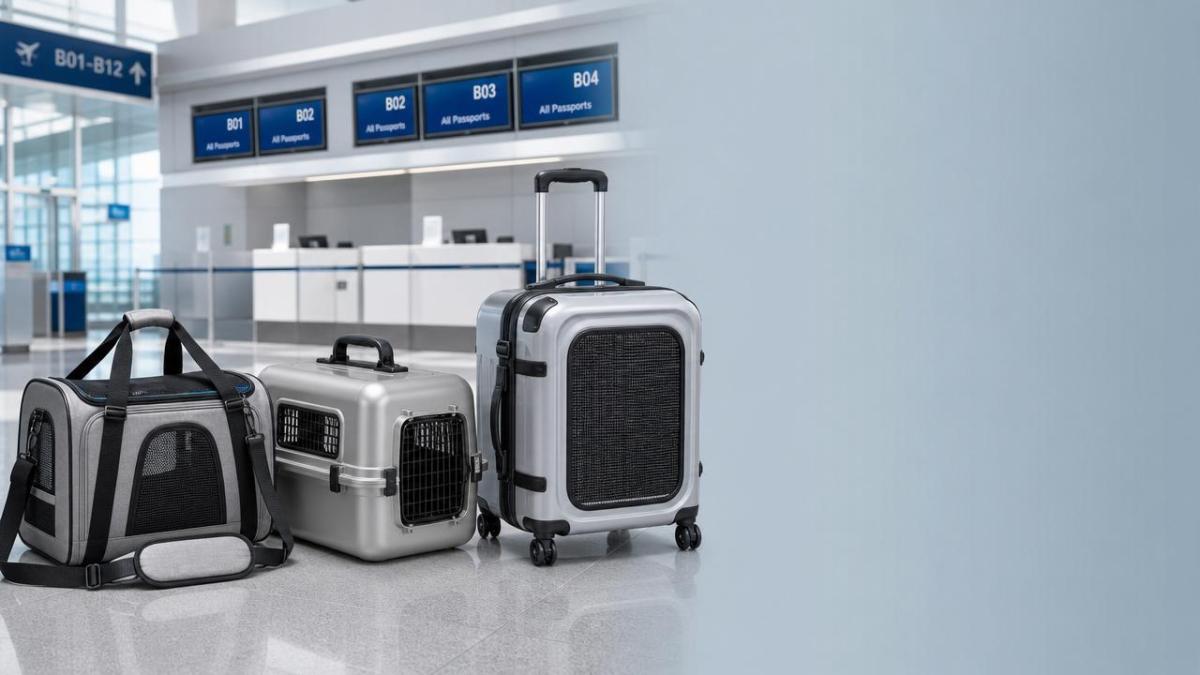
- Soft-sided carriers: Usually preferred for air cabin use, lighter transport, and urban pet owners seeking portability and foldable storage.
- Hard-sided carriers: Better suited to longer trips, car transport, and customers who prioritize rigid protection and easier sanitation.
- Backpack carriers: Popular in younger, mobility-focused segments, but require careful review of ventilation, balance, and pet weight limitations.
- Wheeled carriers: Attractive for airport and station use, though wheel quality, handle reliability, and total weight become critical sourcing variables.
The table below helps pet retail buyers align carrier type with retail opportunity and travel service relevance.
A good assortment usually mixes entry, mid, and premium tiers rather than relying on a single carrier style. That gives pet retail buyers better range planning across travel, gifting, and seasonal promotions.
What should pet retail buyers check first when screening suppliers?
Supplier selection should begin with capability verification, not catalog appeal. Many travel carrier factories can produce attractive samples, but fewer can maintain material consistency, packaging discipline, and on-time shipment across repeat orders.
A practical screening checklist
- Review product specialization. A supplier focused on sewn pet bags may not be equally strong in molded hard-shell structures.
- Ask for construction details. Zipper gauge, mesh density, base reinforcement, handle stitching, and frame insert design should be documented.
- Check quality control stages. Incoming material inspection, in-line sewing checks, load testing, and pre-shipment audits are more important than generic factory photos.
- Verify packaging competence. Retail-ready cartons, barcode accuracy, and protection against compression damage directly affect channel performance.
- Assess communication speed. Delayed answers during sampling often signal slower issue resolution during production.
GCS supports procurement teams by narrowing supplier discovery through category-specific intelligence, which is especially useful when buyers must compare multiple geographies, lead times, and compliance profiles under time pressure.
OEM or private label: which sourcing model supports margin and speed?
Pet retail buyers often need to decide between faster market entry and deeper product differentiation. OEM and private-label programs solve different business problems, so the right answer depends on channel maturity and assortment goals.
The comparison below highlights where each model performs better in travel carrier sourcing.
In many cases, a hybrid approach works best. Buyers can launch private-label carriers to validate demand, then shift top-performing SKUs into OEM refinement once customer reviews reveal which features truly drive conversion and repeat purchase.
Which technical specifications affect quality, returns, and consumer trust?
Small technical details often decide whether a carrier performs well in real travel conditions. Pet retail buyers should request specification sheets that go beyond generic descriptions like durable or premium.
Specifications worth documenting
- Outer fabric type and denier, especially for abrasion resistance in airports, cars, and hotel movement.
- Mesh ventilation coverage and mesh strength, since pet owners quickly notice overheating and tearing issues.
- Base board support and anti-sag reinforcement, critical for pet comfort and perceived product value.
- Zipper closure quality and locking design, especially for nervous pets or frequent transit use.
- Weight capacity guidance supported by structure, not only marketing claims.
For travel service-linked retail environments, practical usability matters as much as raw durability. Easy entry, wipe-clean surfaces, removable pads, and compatibility with luggage or seatbelt systems can increase customer satisfaction more than cosmetic upgrades.
How should buyers handle standards, testing, and compliance questions?
Compliance does not look identical across all destinations, but pet retail buyers should still build a disciplined review process. Travel carriers can involve material safety, labeling, packaging, and consumer product expectations depending on target market.
Compliance areas to clarify early
- Material declarations for fabrics, coatings, plastics, foams, and metal parts.
- Labeling accuracy for weight guidance, care instructions, origin marking, and warning statements.
- Packaging compliance, especially for retail-ready export programs and barcode traceability.
- Third-party testing readiness where buyers require confirmation of chemical, mechanical, or physical safety points.
GCS adds value here by helping procurement teams connect product selection with the right compliance conversations early, before sampling scales into production. That reduces redesign risk, shipment delay, and avoidable documentation gaps.
What drives landed cost, and where can pet retail buyers protect margin?
The cheapest ex-factory quote rarely becomes the best landed-cost result. Travel carriers are sensitive to dimensional shipping cost, packaging volume, accessory count, and rework risk from poor construction.
The table below shows where cost pressure usually appears and how buyers can respond without weakening the product too far.
Margin improves when buyers simplify the right variables, not all variables. Focus cost control on packaging efficiency, color consolidation, and modular accessory planning, while preserving core safety and usability features.
Common sourcing mistakes that slow down pet retail buyers
Many sourcing problems begin with assumptions. A travel carrier that looks strong in a showroom may fail in real logistics, and a factory that offers a low MOQ may not be the right long-term partner.
Mistakes to avoid
- Buying to airline language without checking actual product dimensions and shape retention under use.
- Approving samples without confirming production-grade materials, trims, and color consistency.
- Ignoring carton dimensions until late-stage booking, which can erase pricing advantage.
- Over-customizing too early before demand is validated in the target travel retail segment.
- Treating compliance as a final document step rather than a design-stage requirement.
A disciplined sourcing workflow reduces these errors. Buyers who use structured specifications, pre-production checkpoints, and market-based assortment logic usually make faster decisions with fewer costly revisions.
FAQ for pet retail buyers sourcing travel carriers
How do pet retail buyers choose between soft-sided and hard-sided carriers?
Start with the target journey. Soft-sided models suit cabin-focused, portable use and often sell well in urban and e-commerce channels. Hard-sided carriers work better where protection, easy cleaning, and longer transport matter more than compact storage.
What is the most important sample check before placing an order?
Check structure under realistic load. Add the intended pet weight equivalent, lift by handle, test zipper movement, inspect mesh tension, and review the base board for sagging. A visually neat sample can still fail functional use.
How can buyers reduce risk when launching a new private-label travel carrier line?
Begin with two or three validated formats instead of a broad collection. Use private-label packaging and limited customization, monitor sell-through and review patterns, then upgrade the best SKU into a more distinct OEM version.
What lead-time issues should procurement teams ask about early?
Ask about material sourcing windows, sample revision cycles, peak-season capacity, packaging approval time, and booking coordination. Travel-related demand often clusters around holiday periods, so buffer planning matters.
Why do some low-cost carriers create higher total cost later?
Because weak zippers, unstable frames, poor ventilation, or oversized packaging can trigger returns, complaints, and freight inefficiency. For pet retail buyers, total cost should include after-sales impact, not just initial unit price.
Why work with GCS when sourcing travel carriers for pet retail?
Global Consumer Sourcing is built for buyers who need sharper category decisions, not generic supplier lists. In pet travel carrier sourcing, that means connecting market demand, supplier capability, compliance awareness, and private-label feasibility into one procurement view.
Our strength lies in helping pet retail buyers ask better questions earlier. That includes product selection logic, feature prioritization, cost trade-off analysis, certification planning, and sourcing pathways suited to global retail expansion.
Contact us for sourcing decisions that need clarity
- Confirm key travel carrier parameters, including structure, materials, and packaging direction.
- Compare OEM, private-label, and hybrid options based on margin, lead time, and launch goals.
- Review likely compliance and certification questions for your destination market.
- Discuss sample planning, customization scope, delivery timing, and quotation alignment.
- Refine assortment strategy for travel retail, e-commerce, specialty pet channels, or broader consumer goods programs.
If your team is evaluating suppliers, narrowing specifications, or planning a new pet travel range, GCS can help turn complex sourcing choices into a more resilient and commercially realistic buying plan.
Related Intelligence
 Skincare OEMAug 16, 2026Amazon Enforces AI Human Metadata Rule for Beauty and Personal Care SellersAmazon now enforces AI human metadata rules for beauty sellers. Learn how to protect listings, traffic, and compliance in skincare, cosmetics, and beauty devices.
 Beauty DevicesAug 15, 2026China to Roll Out Nationwide Cross-Border Cash Pooling for MultinationalsChina to roll out nationwide cross-border cash pooling for multinationals from Sept. 14. Discover how this policy could improve treasury efficiency, liquidity management, and China-linked supply chains.
 Beauty DevicesAug 14, 2026China Imposes Temporary Export Ban on Helium, Affecting Cooling Supply ChainsChina's temporary helium export ban may disrupt cooling supply chains for beauty RF devices and laser systems. Learn what ODMs, buyers, and procurement teams should check now.
![]() Cosmetics & PkgAug 13, 2026PPWR becomes mandatory: Beauty and personal care packaging materials usher in new EPR and PFAS compliance requirementsPPWR takes effect for cosmetics packaging in the EU, bringing EPR registration and PFAS limits. Learn what brands, importers, and suppliers must do now.
Cosmetics & PkgAug 13, 2026PPWR becomes mandatory: Beauty and personal care packaging materials usher in new EPR and PFAS compliance requirementsPPWR takes effect for cosmetics packaging in the EU, bringing EPR registration and PFAS limits. Learn what brands, importers, and suppliers must do now. Cosmetics & PkgAug 12, 2026EU PPWR Now Enforced for Beauty Packaging ComplianceEU PPWR now enforced for beauty packaging compliance: learn how EPR, ERN, heavy metals and PFAS rules affect EU exports, customs clearance and platform sales.
 Cosmetics & PkgAug 11, 2026EU PPWR Rules Take Effect on Aug. 12 for Beauty PackagingEU PPWR rules for beauty packaging take effect on Aug. 12, 2026. Learn key compliance steps, EPR, labeling, PFAS limits, and how to avoid customs delays and fines.
 Smart Pet DevicesAug 10, 2026EU EPR Rules to Cover Smart Pet Devices on Aug. 15EU EPR Rules will cover smart pet devices from Aug. 15, 2026. Learn how smart collars, feeders, and monitoring devices can avoid delisting, customs delays, and compliance risks in the EU.
 Infant Feeding & CareAug 09, 2026CPSC Recalls Baby Sleep Sacks Over Undeclared TDCPPCPSC Recalls Baby Sleep Sacks Over Undeclared TDCPP: learn how this 2026 recall impacts CPC documents, third-party testing, and U.S. baby product compliance for exporters.
 Infant Feeding & CareAug 08, 2026ECHA Adds 5 SVHCs, Importer Notices Due From Oct 2026ECHA adds 5 SVHCs to the Candidate List, with importer notices due from October 2026. Learn how REACH affects exporters, supply chains, and documentation readiness.
 Baby Gear & StrollersAug 07, 2026CPSC Revises Crib Rail Standard for November 2026CPSC revises crib rail standard for November 2026, adding dynamic impact tests and mandatory third-party lab testing. Learn how the new rule affects U.S. market access, compliance, and shipments.
 Electronic & RC ToysAug 06, 2026EU to Require EN IEC 62115:2025 for Electronic ToysEU to Require EN IEC 62115:2025 for Electronic Toys from Oct 1, 2026. Learn scope, battery and AI safety updates, CE compliance risks, and how exporters can avoid customs delays.
 Baby Gear & StrollersAug 05, 2026US Stroller Stability Rule Takes Effect Aug. 15US Stroller Stability Rule Takes Effect Aug. 15: learn how new U.S. stroller compliance, ASTM F833-26a, and CPSC testing rules may affect imports, certification, and shipment readiness.
 Infant Feeding & CareAug 04, 2026ECHA Adds 5 SVHCs, Triggering Baby Care Export ReviewECHA adds 5 SVHCs, prompting an urgent baby care export review for EU-bound products. Learn the 0.1% threshold risks, compliance steps, and how to avoid customs delays and fines.












