ASTM F2100-26 Enforces Stricter Mask Standards for US Beauty Industry Imports
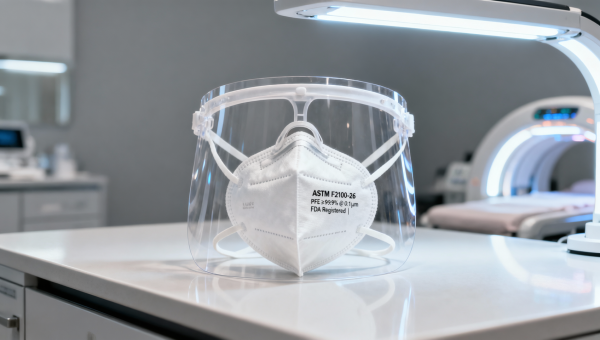
Effective May 1, 2026, the updated ASTM F2100-26 standard for medical face masks enters mandatory force in the United States—extending its scope beyond clinical settings to include disposable protective face shields and respiratory accessories used in professional beauty salons, such as those integrated with LED phototherapy cabins. This regulatory shift directly impacts exporters of personal protective equipment from China targeting the U.S. professional beauty channel.
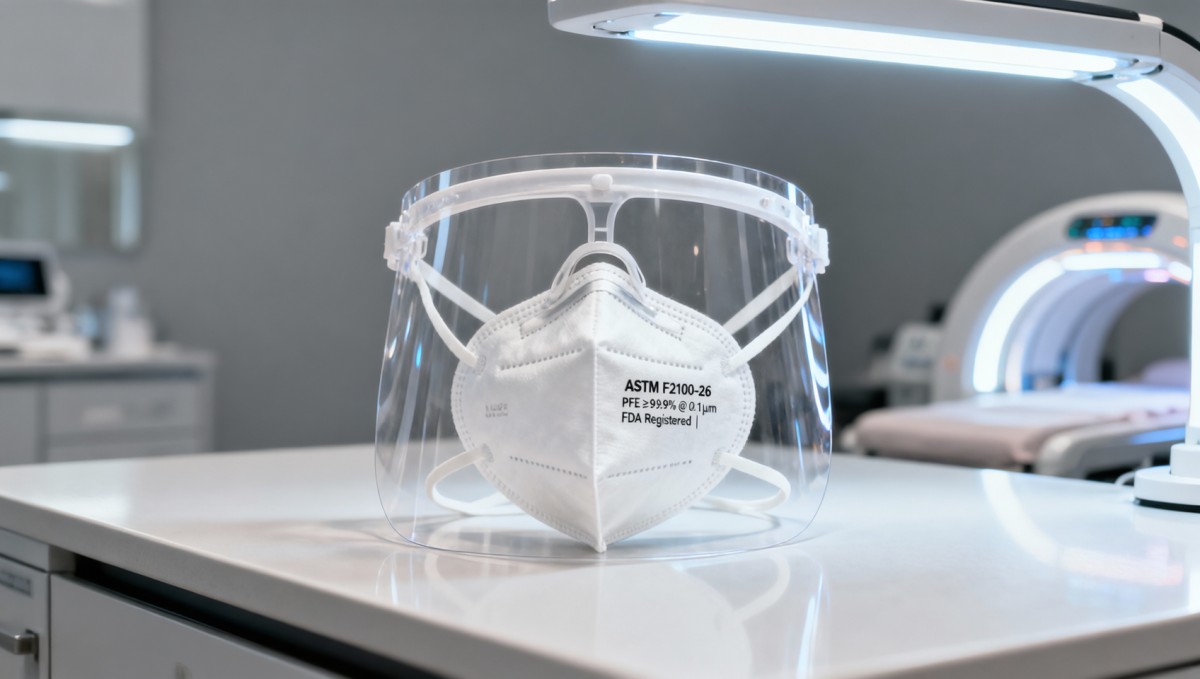
Key Requirements Under ASTM F2100-26
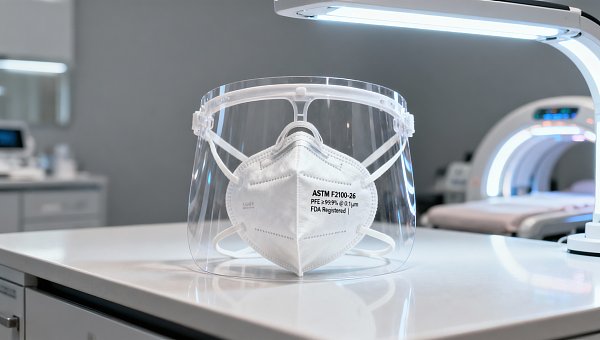
Beginning May 1, 2026, ASTM F2100-26 replaces prior editions as the mandatory benchmark for medical-grade face masks sold in the U.S. The revision introduces two critical performance thresholds: particulate filtration efficiency (PFE) ≥99.9% at 0.1 μm particle size, and resistance to synthetic blood penetration at ≥160 mmHg pressure. Notably, the standard now explicitly applies to non-traditional applications—including single-use facial barriers and respiratory interface components designed for use in aesthetic devices and salon environments.
Supply Chain Impact Across Industry Roles
Direct Exporters
U.S. market access for Chinese manufacturers supplying beauty-sector PPE is now contingent upon dual compliance: FDA establishment registration and successful third-party testing against ASTM F2100-26. Failure to meet both requirements bars entry into professional distribution channels—including licensed salon suppliers, OEM partners of aesthetic device makers, and certified beauty equipment distributors.
Raw Material Suppliers
Producers of melt-blown nonwovens, hydrophobic outer layers, and nose-bridge materials must now validate batch-level PFE performance at 0.1 μm—not only for surgical mask grades but also for substrates intended for cosmetic-proximity applications. Documentation traceability to ASTM-compliant test reports becomes essential for downstream certification.
Contract Manufacturers & Assemblers
Firms engaged in final assembly of hybrid PPE—such as face shields with integrated breathing zones or modular filters for light therapy enclosures—must revalidate full-device integrity under ASTM F2100-26’s new pressure and aerosol challenge protocols. Seal design, strap anchorage, and material layering interfaces are now subject to functional verification.
Logistics & Regulatory Support Providers
Customs brokers and compliance consultants serving cross-border beauty equipment trade must update their pre-shipment review checklists to include ASTM F2100-26 test summaries, FDA registration confirmation, and explicit classification statements confirming applicability to ‘beauty-use respiratory accessories’—not just medical devices.
Actionable Compliance Priorities for Exporters
Immediate Certification Alignment
Verify current FDA registration status and initiate ASTM F2100-26 testing—including PFE at 0.1 μm and synthetic blood resistance—at an ISO/IEC 17025-accredited laboratory. Test reports must reference the exact product configuration intended for U.S. beauty sector deployment (e.g., shield + filter module).
Product Classification & Labeling Review
Reassess product categorization: items previously labeled as ‘general-purpose barrier’ may now fall under ASTM F2100-26 due to their integration with regulated aesthetic devices. Labels must clearly indicate compliance level (Level 1–3), PFE result, and applicable ASTM designation.
Supplier Documentation Cascade
Require upstream material suppliers to provide validated PFE data (0.1 μm) and biocompatibility documentation aligned with ASTM F2100-26 Annex A3. Retain full technical dossiers for FDA audit readiness and distributor due diligence requests.
Channel-Specific Validation Timeline
Factor in minimum 8–12 weeks for full ASTM testing, report generation, FDA portal updates, and distributor onboarding—especially where aesthetic device OEMs require updated technical specifications before approving new accessory integrations.
Industry Perspective: Beyond Medical Compliance
Analysis shows this expansion reflects a broader trend: U.S. regulators increasingly treat proximity-based exposure scenarios—such as prolonged face-to-face interaction in salons—as functionally equivalent to clinical risk contexts. What deserves closer attention is how rapidly adjacent sectors (e.g., wellness, dermatology-adjacent devices) may adopt similar enforcement logic. From an industry perspective, the 0.1 μm PFE threshold signals a de facto shift toward nanofiltration expectations—even for non-respirator products—raising baseline material and process control requirements across the supply chain.
Strategic Implications for Global PPE Sourcing
This change underscores that regulatory convergence no longer follows traditional sector boundaries. For manufacturers and importers, ASTM F2100-26 is no longer solely a ‘medical device’ concern—it is now a prerequisite for participation in high-value professional service ecosystems where hygiene assurance intersects with consumer-facing aesthetics. Proactive alignment—not reactive remediation—is the only viable path to sustained U.S. market access.
Source Attribution & Verification Notes
This article was generated exclusively from the provided information: title, event date (2026-05-01), and summary description. Specific official source links were not provided in the input and should be verified continuously. Stakeholders are advised to monitor updates from ASTM International, the U.S. Food and Drug Administration (FDA), and the American National Standards Institute (ANSI) regarding implementation guidance, enforcement timelines for transitional stock, and clarifications on ‘beauty-use’ product scope interpretation.
Related Intelligence
 STEM & Educational ToysMay 31, 2026Sensory Bath Toys: Safe Materials GuideSensory bath toys made safer: compare materials, certifications, mold-resistant designs, and travel-friendly picks for calmer hotel, resort, and home bath times.
 Pet Grooming & TravelMay 31, 2026Pet International Retail Trends to Watch in 2026Pet international retail trends for 2026 reveal how travel brands can grow revenue with compliant, premium, sustainable pet products for hotels, airports, and tourism channels.
 Pet Furniture & EnrichmentMay 31, 2026Small Animal Cage Manufacturer Cost FactorsSmall animal cage manufacturer cost factors explained: compare materials, compliance, MOQ, logistics, and hidden risks to protect pet travel retail margins.
 Baby Gear & StrollersMay 31, 2026Convertible Car Seats Manufacturer Safety ChecklistConvertible car seats manufacturer safety checklist for travel service buyers—verify compliance, durability, labeling, audits, and supplier quality before sourcing.
 Baby Gear & StrollersMay 31, 2026How to Vet a Convertible Car Seats ManufacturerConvertible car seats manufacturer vetting guide: verify safety compliance, crash-test reports, factory quality, OEM options, and travel retail readiness.
 Default CategoryMay 31, 2026Vietnam Bans Key Insecticides in Kids' Mosquito Patches & Pet DisinfectantsVietnam bans DEET & permethrin in kids' mosquito patches and pet disinfectants—act now to comply with Circular 24/2026 before Aug 1, 2026.
 Default CategoryMay 31, 2026K-REACH STS Registration Exception Launches, Affecting Infant Care Ingredient ImportsK-REACH STS registration exception launched for infant care ingredients like phenoxyethanol—urgent compliance guidance for importers, suppliers & manufacturers.
 Default CategoryMay 31, 2026ASTM F2100-26 Enforces Stricter Mask Standards for US Beauty Industry ImportsASTM F2100-26 raises the bar for US beauty industry PPE—mandating 99.9% PFE at 0.1μm and blood resistance. Exporters: act now to secure FDA + ASTM compliance before May 1, 2026.
 Default CategoryMay 31, 2026EU REACH Adds New Substance Restrictions: Beauty & Smart Pet Devices Must Comply by Nov 2026EU REACH adds new restrictions on EDCs & PFAS—beauty devices & smart pet electronics must comply by Nov 2026. Act now to avoid customs rejection.
 Default CategoryMay 30, 2026Maersk Plans Red Sea Return in Q3; FE-Europe Freight Rates May Drop 20–30% WeeklyMaersk’s Red Sea return plan could cut FE–Europe freight rates by 20–30% weekly — vital intel for activewear OEMs, STEM toy exporters & forwarders planning Q3 logistics.
 Default CategoryMay 30, 2026China Imposes Zero Tariffs on Baby & Pet Furniture for 20 African NationsChina’s zero tariffs on baby & pet furniture for 20 African nations boost export opportunities—unlock cost savings, co-manufacturing, and market entry advantages now.
 Default CategoryMay 30, 2026EU REACH Adds Phthalates Restrictions Affecting Beauty & Pet ElectronicsEU REACH phthalates restrictions now impact beauty devices, pet electronics & RC toys—act before 1 Nov 2026 to ensure compliance and avoid EU market delays.
 Default CategoryMay 30, 2026Hormuz Strait Disruption Delays Infant & Pet Care Shipments by 10–14 DaysHormuz Strait disruption delays infant & pet care shipments by 10–14 days—impacting restocking, compliance, and peak-season planning globally.