K-REACH STS Registration Exception Launches, Affecting Infant Care Ingredient Imports
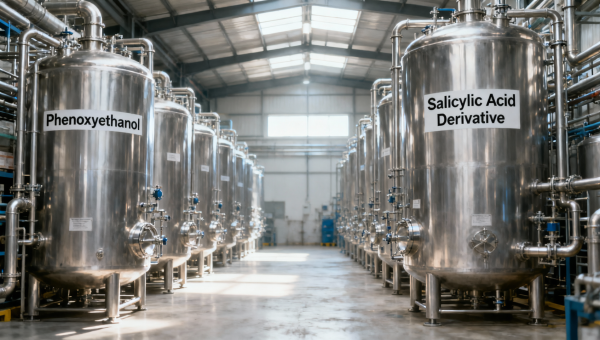
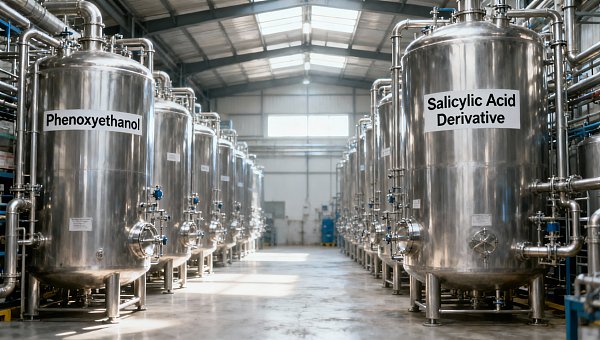
On May 28, 2026, South Korea’s Ministry of Environment launched a special registration pathway under K-REACH for ‘Substances in Short Supply’ (STS), targeting high-risk chemical ingredients used in infant and toddler care products — including preservatives such as phenoxyethanol and salicylic acid derivatives. This measure directly impacts importers, suppliers, and manufacturers reliant on these substances from China and other non-domestic sources, particularly those supplying raw materials for baby washes, feeding utensil disinfectants, and related hygiene products.
Event Overview
South Korea’s Ministry of Environment officially activated the K-REACH ‘Substances in Short Supply’ (STS) registration exception on May 28, 2026. Under this provision, certain hazardous chemicals — specifically named as phenoxyethanol and water-soluble salicylic acid derivatives — may be temporarily imported without full K-REACH registration, provided they are exclusively used in essential infant and toddler hygiene products (e.g., cleansing formulations, feeding equipment disinfectants). Chinese ingredient suppliers must submit complete data packages within 60 days of the policy’s effective date; failure to do so will result in import suspension for downstream importers.
Industries Affected by Segment
Direct Trading Enterprises
Export-oriented trading companies handling chemical shipments from China to South Korea face immediate compliance pressure. Since the STS exception does not waive data obligations — only defers full registration — traders acting as legal importers under K-REACH must now verify whether their supplied substances qualify for the exception and ensure timely submission of required dossiers. Delays risk customs hold-ups or rejection at Korean ports.
Raw Material Procurement Entities
Manufacturers and brand owners sourcing phenoxyethanol or salicylic acid derivatives for infant product formulation are exposed to supply continuity risk. The 60-day deadline applies to upstream suppliers, not end users — meaning procurement teams cannot assume automatic eligibility and must confirm supplier readiness and documentation status before placing new orders.
Contract Manufacturing & Formulation Facilities
CMOs and fill-finish facilities producing infant care products for Korean distribution must review their bill-of-materials against the STS list. If active ingredients fall under the exception scope, production planning must align with expected import timelines — especially given that temporary clearance is conditional and non-transferable across uses or product categories.
Supply Chain & Regulatory Support Providers
Third-party regulatory consultants, testing labs, and dossier preparation services may see short-term demand spikes for STS-specific support — particularly for data gap analysis, Korean-language safety data sheet (SDS) adaptation, and notification filing. However, no new service mandates or accreditation changes have been announced; current capacity constraints remain relevant.
Key Points for Enterprises and Practitioners
Monitor Official Updates from Korea’s Ministry of Environment and NIER
The STS exception is newly implemented and subject to interpretation. Stakeholders should track official guidance issued by the National Institute of Environmental Research (NIER) — especially updates clarifying eligible substance forms, use restrictions, and consequences of late submissions. No public FAQ or implementation manual has been released as of May 28, 2026.
Verify Substance Eligibility and Supplier Commitment Before New Orders
Not all phenoxyethanol or salicylic acid derivative grades automatically qualify. Importers must obtain written confirmation from Chinese suppliers that: (a) the exact CAS number and technical grade match the STS scope, (b) the intended use is limited to infant/toddler hygiene applications, and (c) the supplier commits to submitting the full data package within 60 days. Verbal assurances are insufficient for customs clearance.
Distinguish Between Policy Signal and Operational Readiness
The launch date marks administrative activation — not immediate system readiness. Customs authorities and K-REACH enforcement units may require additional time to implement internal protocols. Enterprises should treat early June 2026 as a transition window, not a hard cutoff, while preparing for stricter enforcement by mid-July 2026.
Prepare Documentation and Internal Alignment Now
Procurement, regulatory affairs, and quality assurance teams should jointly map affected SKUs, identify responsible suppliers, and draft internal checklists covering SDS version control, batch traceability, and Korean-language labeling alignment. Cross-departmental alignment reduces delays if emergency notifications arise.
Editorial Perspective / Industry Observation
Observably, this STS exception functions primarily as a transitional risk-mitigation tool — not a long-term regulatory relaxation. It acknowledges real-world supply bottlenecks while preserving K-REACH’s core data integrity requirements. Analysis shows the policy targets narrow use cases (infant hygiene only) and imposes strict deadlines, suggesting regulators prioritize continuity over compliance leniency. From an industry perspective, it signals growing scrutiny of upstream chemical transparency in sensitive consumer segments — especially where vulnerable populations are involved. Current more appropriate interpretation is that this is a procedural signal, not yet a settled operational framework; its practical impact remains contingent on how consistently and rapidly enforcement agencies apply it across ports and sectors.
This development underscores how chemical regulatory frameworks increasingly intersect with product safety expectations in high-trust categories like infant care. Rather than representing a one-off adjustment, it reflects a broader trend: tighter linkage between substance-level registration status and market access — particularly where health-critical applications are concerned. For stakeholders, the immediate priority is verification and documentation discipline, not strategic repositioning.
Information Source: Official announcement issued by South Korea’s Ministry of Environment on May 28, 2026. Ongoing implementation details — including updated STS substance lists, submission portal access, and enforcement timelines — remain pending official publication and are subject to monitoring.
Related Intelligence
 STEM & Educational ToysMay 31, 2026Sensory Bath Toys: Safe Materials GuideSensory bath toys made safer: compare materials, certifications, mold-resistant designs, and travel-friendly picks for calmer hotel, resort, and home bath times.
 Pet Grooming & TravelMay 31, 2026Pet International Retail Trends to Watch in 2026Pet international retail trends for 2026 reveal how travel brands can grow revenue with compliant, premium, sustainable pet products for hotels, airports, and tourism channels.
 Pet Furniture & EnrichmentMay 31, 2026Small Animal Cage Manufacturer Cost FactorsSmall animal cage manufacturer cost factors explained: compare materials, compliance, MOQ, logistics, and hidden risks to protect pet travel retail margins.
 Baby Gear & StrollersMay 31, 2026Convertible Car Seats Manufacturer Safety ChecklistConvertible car seats manufacturer safety checklist for travel service buyers—verify compliance, durability, labeling, audits, and supplier quality before sourcing.
 Baby Gear & StrollersMay 31, 2026How to Vet a Convertible Car Seats ManufacturerConvertible car seats manufacturer vetting guide: verify safety compliance, crash-test reports, factory quality, OEM options, and travel retail readiness.
 Default CategoryMay 31, 2026Vietnam Bans Key Insecticides in Kids' Mosquito Patches & Pet DisinfectantsVietnam bans DEET & permethrin in kids' mosquito patches and pet disinfectants—act now to comply with Circular 24/2026 before Aug 1, 2026.
 Default CategoryMay 31, 2026K-REACH STS Registration Exception Launches, Affecting Infant Care Ingredient ImportsK-REACH STS registration exception launched for infant care ingredients like phenoxyethanol—urgent compliance guidance for importers, suppliers & manufacturers.
 Default CategoryMay 31, 2026ASTM F2100-26 Enforces Stricter Mask Standards for US Beauty Industry ImportsASTM F2100-26 raises the bar for US beauty industry PPE—mandating 99.9% PFE at 0.1μm and blood resistance. Exporters: act now to secure FDA + ASTM compliance before May 1, 2026.
 Default CategoryMay 31, 2026EU REACH Adds New Substance Restrictions: Beauty & Smart Pet Devices Must Comply by Nov 2026EU REACH adds new restrictions on EDCs & PFAS—beauty devices & smart pet electronics must comply by Nov 2026. Act now to avoid customs rejection.
 Default CategoryMay 30, 2026Maersk Plans Red Sea Return in Q3; FE-Europe Freight Rates May Drop 20–30% WeeklyMaersk’s Red Sea return plan could cut FE–Europe freight rates by 20–30% weekly — vital intel for activewear OEMs, STEM toy exporters & forwarders planning Q3 logistics.
 Default CategoryMay 30, 2026China Imposes Zero Tariffs on Baby & Pet Furniture for 20 African NationsChina’s zero tariffs on baby & pet furniture for 20 African nations boost export opportunities—unlock cost savings, co-manufacturing, and market entry advantages now.
 Default CategoryMay 30, 2026EU REACH Adds Phthalates Restrictions Affecting Beauty & Pet ElectronicsEU REACH phthalates restrictions now impact beauty devices, pet electronics & RC toys—act before 1 Nov 2026 to ensure compliance and avoid EU market delays.
 Default CategoryMay 30, 2026Hormuz Strait Disruption Delays Infant & Pet Care Shipments by 10–14 DaysHormuz Strait disruption delays infant & pet care shipments by 10–14 days—impacting restocking, compliance, and peak-season planning globally.