Vietnam Bans Key Insecticides in Kids' Mosquito Patches & Pet Disinfectants
Vietnam’s Ministry of Health issued a new regulatory notice on May 25, 2026, imposing strict restrictions on active ingredients in consumer insect-repellent and disinfectant products targeting infants and pets—triggering immediate compliance considerations for exporters and supply chain stakeholders.
New Regulatory Restrictions Take Effect August 1, 2026
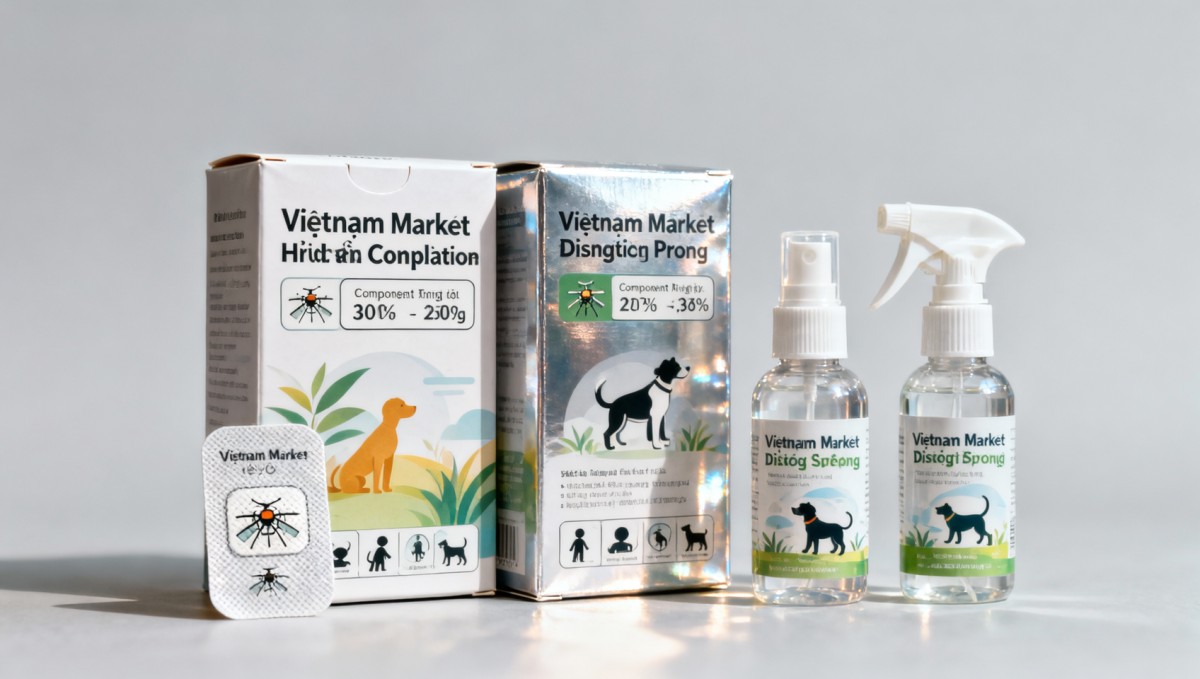
Under Circular No. 24/2026/TT-BYT, effective August 1, 2026, Vietnam’s Ministry of Health prohibits six active substances—including DEET (at concentrations above 15%) and permethrin—in mosquito-repellent patches for children and environmental disinfectant sprays for pets. The regulation further mandates bilingual labeling (Vietnamese plus English or the exporter’s language) on all antimicrobial-containing products, specifying both ingredient concentration and applicable age group or animal species.
Impact Across Supply Chain Roles
Exporters and Trading Companies
Direct exporters face urgent reformulation and relabeling requirements before the August 1 deadline. Products already in transit or held in Vietnamese customs warehouses may be rejected or subject to reprocessing if non-compliant with the dual-language disclosure rule or banned ingredient thresholds.
Raw Material Suppliers
Suppliers of DEET, permethrin, and the four other restricted actives must now verify end-use declarations and update safety data sheets to reflect Vietnamese market exclusions. Demand shifts toward alternative repellents (e.g., picaridin, IR3535) and non-chemical antimicrobials are expected.
Contract Manufacturers & Formulators
Manufacturers producing private-label or OEM mosquito patches and pet disinfectants must revise formulations, conduct stability testing under new ingredient limits, and validate updated packaging artwork—including accurate bilingual dosage and usage statements—within the 77-day transition window.
Logistics and Compliance Service Providers
Third-party certification bodies, labeling consultants, and customs brokers will see increased demand for pre-shipment verification, Vietnamese-language label audits, and documentation support for Ministry of Health registration updates.
Key Actions for Affected Enterprises
Immediate Ingredient & Label Audit
Review all product formulas against the six prohibited actives and confirm whether any batch exceeds the 15% DEET threshold. Simultaneously assess current packaging for bilingual compliance—both quantitative ingredient disclosure and appropriate user-group identification.
Regulatory Registration Alignment
Update existing product registrations with Vietnam’s Drug Administration under the Ministry of Health to reflect revised formulations and labeling. Note that registration amendments may require submission of new toxicological summaries or pediatric/animal safety assessments.
Transition Timeline Management
With only 77 days between issuance (May 25) and enforcement (August 1), prioritize production scheduling, label printing, and inventory clearance. Consider staggered shipments to avoid post-deadline customs delays or port holds.
Supplier Qualification Review
Re-evaluate upstream suppliers’ ability to provide compliant raw materials and certified documentation (e.g., CoA with concentration verification). Where necessary, initiate qualification of alternative ingredient sources ahead of full-scale reformulation.
Industry Observation: Tight Timeline Amplifies Technical and Linguistic Barriers
Analysis shows this regulation marks a notable escalation in Vietnam’s technical barrier strategy—not through outright market closure, but via accelerated compliance cycles and precise linguistic disclosure requirements. Observably, the 77-day window is significantly shorter than typical ASEAN regulatory transitions, compressing time for formulation validation, multilingual label design, and regulatory feedback loops. What deserves closer attention is how this may accelerate consolidation among smaller exporters lacking in-house regulatory affairs capacity—and incentivize shared-labeling service models across regional manufacturing hubs.
Strategic Implication: Compliance Is Now a Time-Bound Operational Priority
This measure underscores a broader shift: regulatory alignment is no longer a back-office function but a frontline operational constraint affecting product development timelines, procurement lead times, and customer delivery commitments. Enterprises exporting to Vietnam should treat such notices not as isolated policy updates—but as signals of tightening harmonization with EU-style precautionary principles in consumer health product oversight.
Source Information and Verification Notes
This article was generated exclusively from the provided input: title, event date (May 25, 2026), and summary of Circular No. 24/2026/TT-BYT. Specific official source links were not provided in the input and should be verified continuously. Stakeholders are advised to monitor updates from Vietnam’s Ministry of Health, the Drug Administration, and the General Department of Vietnam Customs for implementation guidance, interpretation clarifications, and potential amendments to labeling or transitional provisions.
Related Intelligence
 STEM & Educational ToysMay 31, 2026Sensory Bath Toys: Safe Materials GuideSensory bath toys made safer: compare materials, certifications, mold-resistant designs, and travel-friendly picks for calmer hotel, resort, and home bath times.
 Pet Grooming & TravelMay 31, 2026Pet International Retail Trends to Watch in 2026Pet international retail trends for 2026 reveal how travel brands can grow revenue with compliant, premium, sustainable pet products for hotels, airports, and tourism channels.
 Pet Furniture & EnrichmentMay 31, 2026Small Animal Cage Manufacturer Cost FactorsSmall animal cage manufacturer cost factors explained: compare materials, compliance, MOQ, logistics, and hidden risks to protect pet travel retail margins.
 Baby Gear & StrollersMay 31, 2026Convertible Car Seats Manufacturer Safety ChecklistConvertible car seats manufacturer safety checklist for travel service buyers—verify compliance, durability, labeling, audits, and supplier quality before sourcing.
 Baby Gear & StrollersMay 31, 2026How to Vet a Convertible Car Seats ManufacturerConvertible car seats manufacturer vetting guide: verify safety compliance, crash-test reports, factory quality, OEM options, and travel retail readiness.
 Default CategoryMay 31, 2026Vietnam Bans Key Insecticides in Kids' Mosquito Patches & Pet DisinfectantsVietnam bans DEET & permethrin in kids' mosquito patches and pet disinfectants—act now to comply with Circular 24/2026 before Aug 1, 2026.
 Default CategoryMay 31, 2026K-REACH STS Registration Exception Launches, Affecting Infant Care Ingredient ImportsK-REACH STS registration exception launched for infant care ingredients like phenoxyethanol—urgent compliance guidance for importers, suppliers & manufacturers.
 Default CategoryMay 31, 2026ASTM F2100-26 Enforces Stricter Mask Standards for US Beauty Industry ImportsASTM F2100-26 raises the bar for US beauty industry PPE—mandating 99.9% PFE at 0.1μm and blood resistance. Exporters: act now to secure FDA + ASTM compliance before May 1, 2026.
 Default CategoryMay 31, 2026EU REACH Adds New Substance Restrictions: Beauty & Smart Pet Devices Must Comply by Nov 2026EU REACH adds new restrictions on EDCs & PFAS—beauty devices & smart pet electronics must comply by Nov 2026. Act now to avoid customs rejection.
 Default CategoryMay 30, 2026Maersk Plans Red Sea Return in Q3; FE-Europe Freight Rates May Drop 20–30% WeeklyMaersk’s Red Sea return plan could cut FE–Europe freight rates by 20–30% weekly — vital intel for activewear OEMs, STEM toy exporters & forwarders planning Q3 logistics.
 Default CategoryMay 30, 2026China Imposes Zero Tariffs on Baby & Pet Furniture for 20 African NationsChina’s zero tariffs on baby & pet furniture for 20 African nations boost export opportunities—unlock cost savings, co-manufacturing, and market entry advantages now.
 Default CategoryMay 30, 2026EU REACH Adds Phthalates Restrictions Affecting Beauty & Pet ElectronicsEU REACH phthalates restrictions now impact beauty devices, pet electronics & RC toys—act before 1 Nov 2026 to ensure compliance and avoid EU market delays.
 Default CategoryMay 30, 2026Hormuz Strait Disruption Delays Infant & Pet Care Shipments by 10–14 DaysHormuz Strait disruption delays infant & pet care shipments by 10–14 days—impacting restocking, compliance, and peak-season planning globally.