CPSC Tightens STEM Toy Battery Compartment Standards
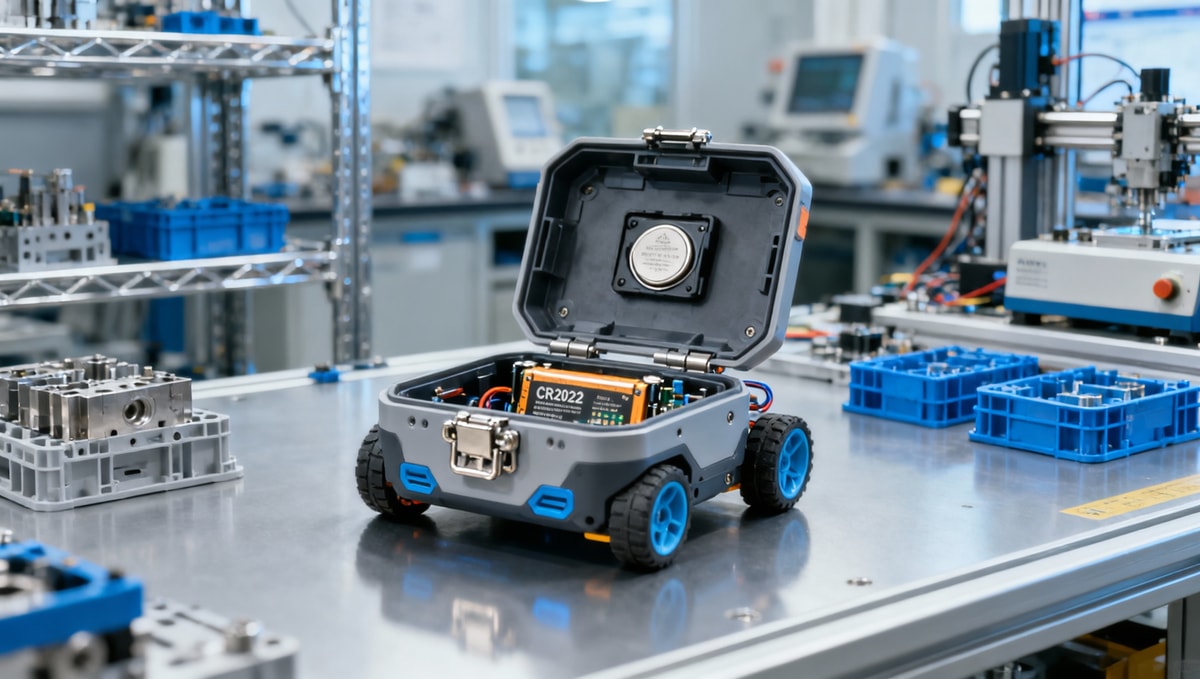
On April 28, 2026, the U.S. Consumer Product Safety Commission (CPSC) issued the 16 CFR Part 1250 Amendment, introducing stricter structural requirements for replaceable button battery compartments in STEM educational toys. Effective July 1, 2026, the new rule mandates a dynamic pressure + vibration simulation test (ASTM F963-26 Annex D2) to prevent accidental access and ingestion. This development directly impacts manufacturers of STEM and educational toys—especially those based in China—and supply chain stakeholders engaged in design, production, compliance verification, and export logistics to the U.S. market.
Event Overview
The U.S. CPSC published the 16 CFR Part 1250 Amendment on April 28, 2026. The amendment adds a new ‘dynamic pressure + vibration simulation’ test (per ASTM F963-26 Annex D2) specifically for replaceable coin-cell battery compartments in STEM toys. Enforcement begins on July 1, 2026. The regulation targets physical compartment integrity—not battery chemistry or labeling—and applies to all newly manufactured products entering U.S. commerce after that date. Verified cases of shipment rejection during factory inspections have already occurred in South China manufacturing hubs.
Industries Affected by Segment
Manufacturers of STEM & Educational Toys
These firms face direct compliance risk because the rule applies to product structure—not just documentation. Failure to redesign battery compartment latches and update injection molds may result in full-batch rejection at U.S. port-of-entry or pre-shipment inspection. Current evidence shows rejections are already occurring during third-party factory audits in Guangdong.
Contract Manufacturers & OEM/ODM Factories
Factories producing under private label or white-label arrangements must verify whether their existing tooling meets the new mechanical test criteria. Since the test simulates real-world handling stress—including vibration and sustained pressure—the existing snap-fit or sliding-lid mechanisms may no longer pass without engineering revision.
Compliance & Testing Service Providers
Third-party labs and certification bodies must now validate capability to perform ASTM F963-26 Annex D2. Labs not yet accredited for this specific sub-clause may delay test turnaround times or require clients to reroute samples—a bottleneck for time-sensitive production cycles ahead of the July 2026 deadline.
Export Trading Companies & Importers of Record
U.S.-based importers and trading companies assuming legal responsibility for compliance must confirm battery compartment design changes before shipment. Absent documented verification (e.g., test reports referencing Annex D2), customs clearance may be delayed or denied—even if prior shipments passed under older versions of ASTM F963.
What Relevant Enterprises Should Monitor and Do Now
Confirm applicability to current SKUs and production lines
Not all STEM toys fall under this requirement: only those with user-replaceable button batteries (e.g., lithium CR2032, alkaline LR44). Products using sealed, non-replaceable power sources—or those powered solely by USB/rechargeable packs—are outside scope. Companies should conduct an immediate SKU-level review to identify affected items.
Engage mold and mechanical design teams before June 2026
Tooling updates take 6–10 weeks for validation and trial runs. With enforcement starting July 1, 2026, factories must complete design revisions, mold modifications, and functional testing—including the new dynamic test—no later than early June. Delayed action risks inventory write-offs or missed shipping windows.
Require updated test reports referencing ASTM F963-26 Annex D2
Historical test reports citing earlier editions (e.g., ASTM F963-17 or F963-23) do not satisfy the new requirement. Buyers and importers should explicitly request reports that name Annex D2 and describe test conditions (e.g., applied load, frequency, duration). Generic statements such as “meets ASTM F963” are insufficient.
Track CPSC guidance documents and lab accreditation status
The CPSC has not yet published implementation FAQs or recognized specific labs for Annex D2. Stakeholders should monitor the CPSC’s official website and subscribe to updates from accredited testing bodies (e.g., UL, SGS, Intertek) for formal recognition announcements—particularly regarding calibration protocols and repeatability thresholds for the vibration+pressure test.
Editorial Perspective / Industry Observation
This amendment is best understood not as a sudden regulatory shift, but as an acceleration of an ongoing trend: U.S. regulators increasingly treating mechanical safety—especially around small, high-risk components—as a non-negotiable design baseline. Analysis shows the CPSC is responding to persistent incident data involving button battery ingestion, with STEM toys identified as a growing exposure due to frequent hands-on interaction and modular battery access. Observably, the timing—just 10 weeks between publication and enforcement—suggests the agency expects industry readiness, implying prior informal consultation or draft alignment. From an industry perspective, this signals that structural battery safety is now a first-tier compliance gate, not a secondary feature.
It is more accurate to interpret this as an operational signal than a finalized outcome: while the rule is legally binding as of July 1, 2026, actual enforcement patterns (e.g., sampling frequency, port detention rates, or interpretation of ‘dynamic’ test parameters) remain subject to CPSC field guidance and may evolve over the next 6–12 months.
Current monitoring priorities should therefore focus less on whether the rule exists—and more on how consistently it is applied across labs, inspectors, and ports.
Conclusion
This amendment marks a concrete escalation in U.S. regulatory expectations for physical safety in children’s educational products. Its significance lies not in novelty—battery compartment integrity has long been regulated—but in the specificity, test methodology, and compressed timeline. For affected enterprises, the priority is not broad strategic reassessment, but precise, time-bound engineering and documentation action. It is better understood as a targeted compliance checkpoint than a systemic market barrier—provided response timelines and technical specifications are met rigorously.
Information Sources
Main source: U.S. CPSC Federal Register Notice for 16 CFR Part 1250 Amendment, published April 28, 2026.
Additional context: Verified factory inspection outcomes reported by third-party quality assurance providers in Guangdong Province (as of May 2026); no further public data available on enforcement volume or lab accreditation status—these remain under observation.
Related Intelligence
") Skincare OEMApr 30, 2026FDA Adds New INCI Code for Plant Stem Cell Extracts (PSC-2026)FDA's new PSC-2026 INCI code for plant stem cell extracts demands strict documentation—get compliant fast to avoid U.S. shipment delays.
Skincare OEMApr 30, 2026FDA Adds New INCI Code for Plant Stem Cell Extracts (PSC-2026)FDA's new PSC-2026 INCI code for plant stem cell extracts demands strict documentation—get compliant fast to avoid U.S. shipment delays. Electronic & RC ToysApr 30, 2026RC Toy Orders Shift to South China Cluster, Lead Time Cuts to 6 WeeksRC toy orders are shifting to South China’s Dongguan–Shenzhen–Zhongshan cluster—lead times slashed to 6 weeks. Discover how exporters, suppliers & logistics players can adapt now.
 Cosmetics & PkgApr 30, 2026SASO Updates Cosmetics Packaging Rules for Plant ExtractsSASO updates cosmetics packaging rules for plant extracts—mandatory migration & light stability testing from Oct 1, 2026. Act now to avoid delays!
 Corporate & Seasonal GiftsApr 30, 2026Germany UBA Launches Mandatory Carbon Labelling Pilot for Corporate Gift InksGermany UBA's new Carbon Labelling Pilot mandates verified ink carbon footprints for corporate gifts—key for Chinese exporters & B2B gifting suppliers entering Germany.
 Fitness EquipmentApr 30, 2026THE Alliance Cuts Shanghai–LA Capacity Again: Fitness Equipment Shipment Delays to 8–10 WeeksFitness equipment shipment delays hit 8–10 weeks as THE Alliance cuts Shanghai–LA capacity by 22%. Urgent insights for exporters, forwarders & U.S. importers.
 Camping & WaterApr 30, 2026Vietnam MOIT Suspends Import Licenses for Camping & Water PumpsVietnam MOIT suspends import licenses for camping & water pumps—IP6X and ASTM B117 compliance now mandatory. Act now to avoid delays.
 Smart Pet DevicesApr 30, 2026Japan METI Adds Smart Cat Litter Machines to PSE Fast-Track ListSmart cat litter machines now qualify for Japan's PSE fast-track certification — just 7 days for Chinese-made units with auto-cleaning, APP control & biological sensing.
 STEM & Educational ToysApr 30, 2026CPSC Tightens STEM Toy Battery Compartment StandardsCPSC Tightens STEM Toy Battery Compartment Standards: New ASTM F963-26 Annex D2 test mandates dynamic pressure + vibration compliance by July 1, 2026—act now to avoid shipment rejections.
 Infant Feeding & CareApr 30, 2026RCEP Launches Infant Feeding Fast Track for China NMPA Class II ProductsRCEP Infant Feeding Fast Track now live: China NMPA Class II products skip redundant testing in 5 ASEAN markets — faster certification, 40%+ cost savings.
 Beauty DevicesApr 30, 2026EU EPR Rules Take Effect for Beauty & Baby Monitors on Apr 29, 2026EU EPR rules for beauty & baby monitors take effect Apr 29, 2026 — mandatory registration, fees & compliance for exporters. Act now to avoid customs delays & marketplace deactivation.
 2026/789 on Beauty Device Packaging Takes Effect") Beauty DevicesApr 29, 2026EU Regulation (EU) 2026/789 on Beauty Device Packaging Takes EffectEU Regulation (EU) 2026/789 mandates 30% recycled plastic & LCA declarations for beauty device packaging — act now to avoid Amazon.de/fr rejections!
Beauty DevicesApr 29, 2026EU Regulation (EU) 2026/789 on Beauty Device Packaging Takes EffectEU Regulation (EU) 2026/789 mandates 30% recycled plastic & LCA declarations for beauty device packaging — act now to avoid Amazon.de/fr rejections! Electronic & RC ToysApr 29, 2026ICTA: RC Toy Orders Shift to South China, Lead Time Cuts to 6 WeeksICTA reports RC toy orders shifting to South China—78% now flow to Guangdong’s cluster, cutting lead times to just 6 weeks. Act now to optimize sourcing, compliance & logistics.
 STEM & Educational ToysApr 29, 2026CPSC Nanomaterial Migration Rule for STEM Toys Effective Q3 2026CPSC Nanomaterial Migration Rule for STEM Toys: New ASTM F963–24 testing (≤0.05 mg/cm²/h) mandatory from Oct 1, 2026—avoid detention & recalls.