THE Alliance Cuts Shanghai–LA Capacity Again: Fitness Equipment Shipment Delays to 8–10 Weeks
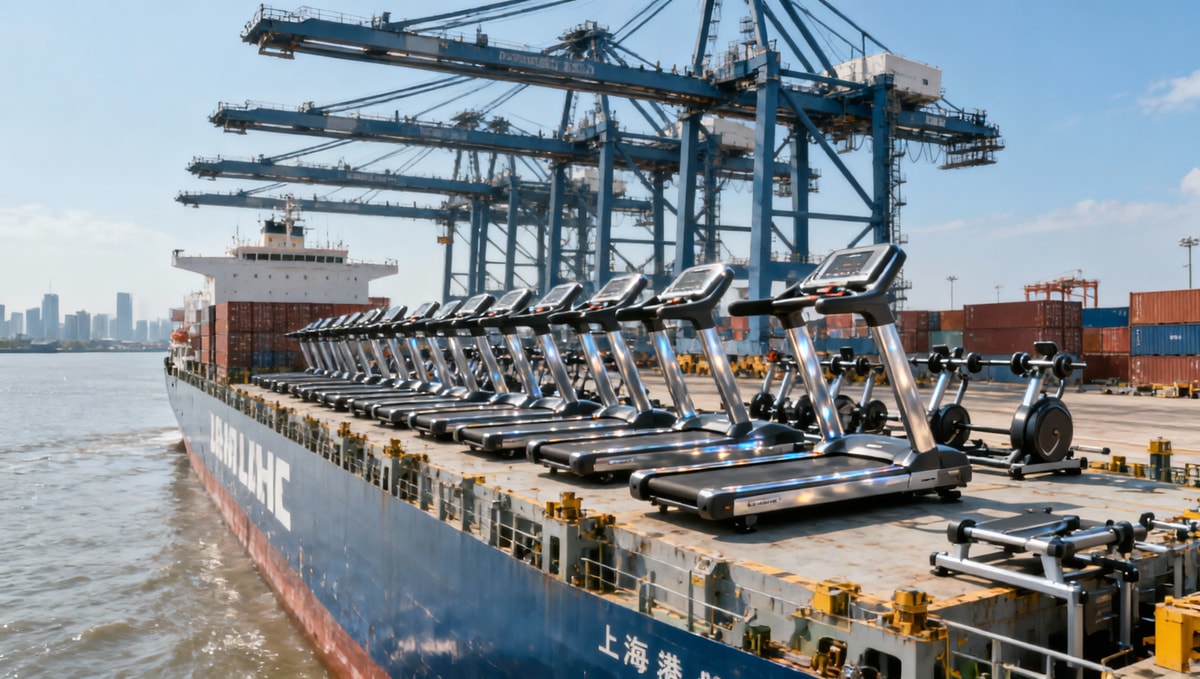
On April 27, 2026, THE Alliance announced a second round of capacity reductions on the Shanghai–Los Angeles container shipping route—cutting slot allocations by 22% effective May 2026. This development directly impacts exporters of large-volume, space-sensitive goods, especially fitness equipment manufacturers and their logistics partners, due to sustained congestion at U.S. West Coast ports and insufficient empty container repositioning.
Event Overview
Following an initial capacity reduction on April 22, 2026, THE Alliance confirmed on April 27, 2026, that it would further reduce vessel slot allocations on the Shanghai–Los Angeles corridor by 22% starting in May 2026. The carrier cited ongoing port congestion at U.S. West Coast terminals and inadequate return flows of empty containers as primary causes. Current FOB Shanghai–LA ocean freight rates for 40-foot high-cube (FEU) containers have exceeded USD 3,800, and carriers are no longer honoring ‘guaranteed space and equipment’ commitments. Multiple fitness equipment manufacturers based in South China have begun shifting to transshipment via Vietnam or Malaysia using consolidated LCL/FCL solutions.
Which Subsectors Are Affected
Direct Exporters (Fitness Equipment OEMs/ODMs)
Fitness equipment exporters face direct operational pressure: oversized units require dedicated stowage and extended terminal dwell time, making them highly vulnerable to slot rationing and port delays. With guaranteed bookings suspended and lead times stretching to 8–10 weeks, order fulfillment cycles are now materially extended—impacting customer commitments and inventory planning.
Contract Manufacturers & Assemblers (Shanghai/Guangdong-based)
Manufacturers handling final assembly or kitting for global brands experience cascading scheduling risk. Reduced sailings mean tighter window constraints for component delivery, finished-goods consolidation, and documentation cutoffs. Delays compound when inland transport (e.g., trucking from inland factories to Shanghai/Nansha ports) cannot be synchronized with shrinking vessel availability.
Freight Forwarders & NVOCCs Serving Fitness Equipment Trade
Forwarders report declining success rates in securing firm bookings on THE Alliance services—and rising reliance on alternative alliances or non-alliance carriers with less predictable transit times. Their ability to quote fixed-rate, fixed-transit-time contracts has eroded, increasing liability exposure and requiring more frequent client renegotiation.
Importers & Retailers (U.S.-based Fitness Brands/Distributors)
U.S. importers face delayed replenishment, elevated landed costs (due to higher freight + potential demurrage/detention), and reduced flexibility in seasonal promotion planning. Inventory buffers may need adjustment, and some are exploring nearshoring of lower-tier SKUs—but this is not yet reflected in current trade flows.
What Relevant Companies or Practitioners Should Monitor and Do Now
Track official service updates—not just alliance announcements, but individual carrier advisories
THE Alliance members (Hapag-Lloyd, Ocean Network Express, Yang Ming, HMM) issue separate operational notices. Differences in implementation timing, surcharge applicability, or alternate port rotations (e.g., Long Beach vs. Oakland) may create actionable short-term opportunities—or unexpected bottlenecks.
Monitor fitness equipment-specific rate indices and port dwell data for LA/LB
General container freight indices (e.g., Drewry WCI, Freightos Baltic Index) mask category-level volatility. Fitness equipment shipments often incur premium surcharges for oversized handling; observing terminal gate wait times and chassis availability at Pier J or Terminal Island provides earlier signals than headline congestion metrics.
Distinguish between policy intent and actual booking feasibility
While THE Alliance cites ‘empty container imbalance’ as rationale, analysis shows that the Shanghai–LA lane faces disproportionate outbound volume skew (vs. inbound), meaning the constraint is structural—not temporary. Accepting ‘future sailing guarantees’ without documented slot confirmation remains high-risk.
Activate contingency plans for origin consolidation and transshipment
Several South China producers are already routing via Ho Chi Minh City or Port Klang for LCL consolidation and onward FEU shipment. Observably, this adds 5–7 days transit time but improves booking certainty and avoids Shanghai port gate delays. Documentation complexity (e.g., double customs clearance) requires pre-vetting with local agents.
Editorial Perspective / Industry Observation
This is not an isolated capacity adjustment—it reflects tightening structural constraints on the core Transpacific Eastbound (TPEB) lane. Analysis shows that THE Alliance’s sequential cuts (April 22 → April 27) signal escalating operational stress, not merely tactical load balancing. From an industry perspective, it is better understood as an early-stage supply chain recalibration trigger: shippers are being forced to reassess port selection, equipment specifications (e.g., collapsible frame designs), and contractual terms with carriers. Continued monitoring is warranted—not because reversal is likely, but because secondary effects (e.g., rate spillover to non-alliance carriers, inland rail diversion pressure) are still unfolding.
Current more relevant interpretation is that this represents a *material shift in booking reliability*, not just a price increase. It signals diminishing carrier tolerance for volume unpredictability in high-congestion lanes—and suggests longer-term reevaluation of Asia–U.S. West Coast dependency is becoming operationally urgent for affected sectors.
Conclusion
This capacity reduction underscores how infrastructure bottlenecks—particularly at key gateway ports—can rapidly translate into tangible working-capital and planning impacts for specific export categories. For fitness equipment exporters and their partners, the immediate implication is not just cost inflation, but a fundamental compression of schedule certainty. The event is best interpreted not as a transient disruption, but as a measurable inflection point in Transpacific service reliability—one that elevates the strategic value of diversified routing, flexible packaging, and proactive carrier engagement.
Source Attribution
Primary source: Official THE Alliance service advisory dated April 27, 2026.
Additional context: Verified freight rate data and shipper reports from South China manufacturing hubs (Guangdong, Zhejiang), as of April 26–27, 2026.
Note: Ongoing developments—including potential responses from other alliances (2M, Ocean Alliance) or U.S. port authority mitigation measures—remain under observation and are not yet confirmed.
Related Intelligence
") Skincare OEMApr 30, 2026FDA Adds New INCI Code for Plant Stem Cell Extracts (PSC-2026)FDA's new PSC-2026 INCI code for plant stem cell extracts demands strict documentation—get compliant fast to avoid U.S. shipment delays.
Skincare OEMApr 30, 2026FDA Adds New INCI Code for Plant Stem Cell Extracts (PSC-2026)FDA's new PSC-2026 INCI code for plant stem cell extracts demands strict documentation—get compliant fast to avoid U.S. shipment delays. Electronic & RC ToysApr 30, 2026RC Toy Orders Shift to South China Cluster, Lead Time Cuts to 6 WeeksRC toy orders are shifting to South China’s Dongguan–Shenzhen–Zhongshan cluster—lead times slashed to 6 weeks. Discover how exporters, suppliers & logistics players can adapt now.
 Cosmetics & PkgApr 30, 2026SASO Updates Cosmetics Packaging Rules for Plant ExtractsSASO updates cosmetics packaging rules for plant extracts—mandatory migration & light stability testing from Oct 1, 2026. Act now to avoid delays!
 Corporate & Seasonal GiftsApr 30, 2026Germany UBA Launches Mandatory Carbon Labelling Pilot for Corporate Gift InksGermany UBA's new Carbon Labelling Pilot mandates verified ink carbon footprints for corporate gifts—key for Chinese exporters & B2B gifting suppliers entering Germany.
 Fitness EquipmentApr 30, 2026THE Alliance Cuts Shanghai–LA Capacity Again: Fitness Equipment Shipment Delays to 8–10 WeeksFitness equipment shipment delays hit 8–10 weeks as THE Alliance cuts Shanghai–LA capacity by 22%. Urgent insights for exporters, forwarders & U.S. importers.
 Camping & WaterApr 30, 2026Vietnam MOIT Suspends Import Licenses for Camping & Water PumpsVietnam MOIT suspends import licenses for camping & water pumps—IP6X and ASTM B117 compliance now mandatory. Act now to avoid delays.
 Smart Pet DevicesApr 30, 2026Japan METI Adds Smart Cat Litter Machines to PSE Fast-Track ListSmart cat litter machines now qualify for Japan's PSE fast-track certification — just 7 days for Chinese-made units with auto-cleaning, APP control & biological sensing.
 STEM & Educational ToysApr 30, 2026CPSC Tightens STEM Toy Battery Compartment StandardsCPSC Tightens STEM Toy Battery Compartment Standards: New ASTM F963-26 Annex D2 test mandates dynamic pressure + vibration compliance by July 1, 2026—act now to avoid shipment rejections.
 Infant Feeding & CareApr 30, 2026RCEP Launches Infant Feeding Fast Track for China NMPA Class II ProductsRCEP Infant Feeding Fast Track now live: China NMPA Class II products skip redundant testing in 5 ASEAN markets — faster certification, 40%+ cost savings.
 Beauty DevicesApr 30, 2026EU EPR Rules Take Effect for Beauty & Baby Monitors on Apr 29, 2026EU EPR rules for beauty & baby monitors take effect Apr 29, 2026 — mandatory registration, fees & compliance for exporters. Act now to avoid customs delays & marketplace deactivation.
 2026/789 on Beauty Device Packaging Takes Effect") Beauty DevicesApr 29, 2026EU Regulation (EU) 2026/789 on Beauty Device Packaging Takes EffectEU Regulation (EU) 2026/789 mandates 30% recycled plastic & LCA declarations for beauty device packaging — act now to avoid Amazon.de/fr rejections!
Beauty DevicesApr 29, 2026EU Regulation (EU) 2026/789 on Beauty Device Packaging Takes EffectEU Regulation (EU) 2026/789 mandates 30% recycled plastic & LCA declarations for beauty device packaging — act now to avoid Amazon.de/fr rejections! Electronic & RC ToysApr 29, 2026ICTA: RC Toy Orders Shift to South China, Lead Time Cuts to 6 WeeksICTA reports RC toy orders shifting to South China—78% now flow to Guangdong’s cluster, cutting lead times to just 6 weeks. Act now to optimize sourcing, compliance & logistics.
 STEM & Educational ToysApr 29, 2026CPSC Nanomaterial Migration Rule for STEM Toys Effective Q3 2026CPSC Nanomaterial Migration Rule for STEM Toys: New ASTM F963–24 testing (≤0.05 mg/cm²/h) mandatory from Oct 1, 2026—avoid detention & recalls.