Vietnam MOIT Suspends Import Licenses for Camping & Water Pumps
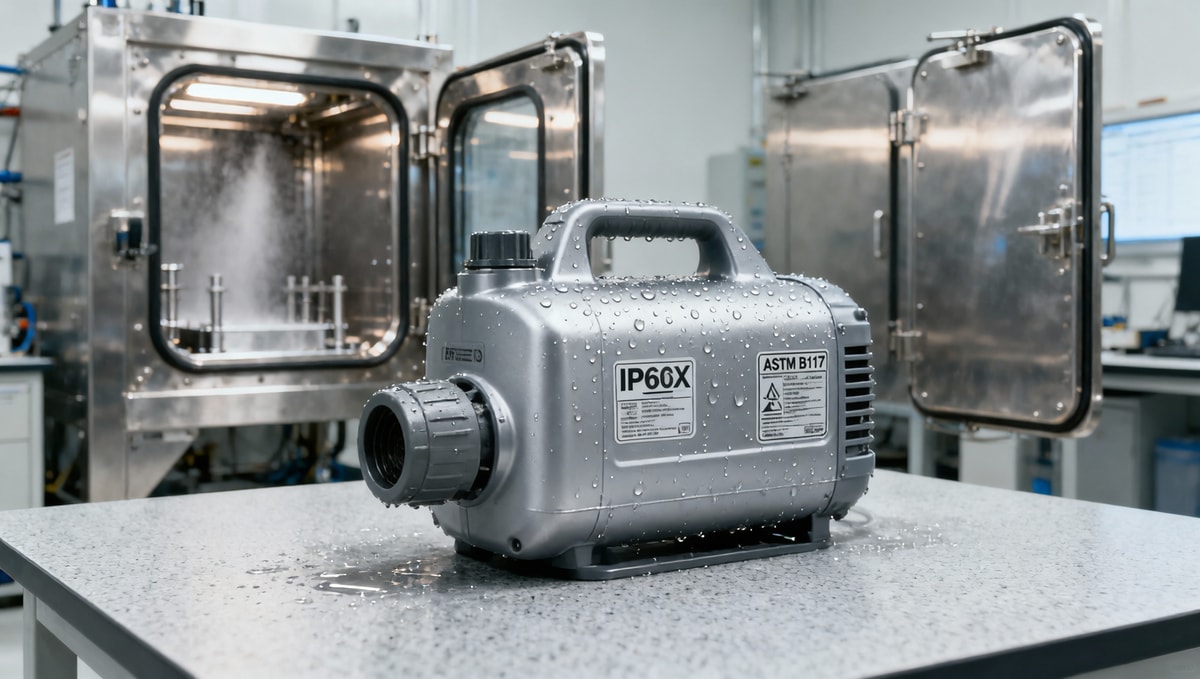
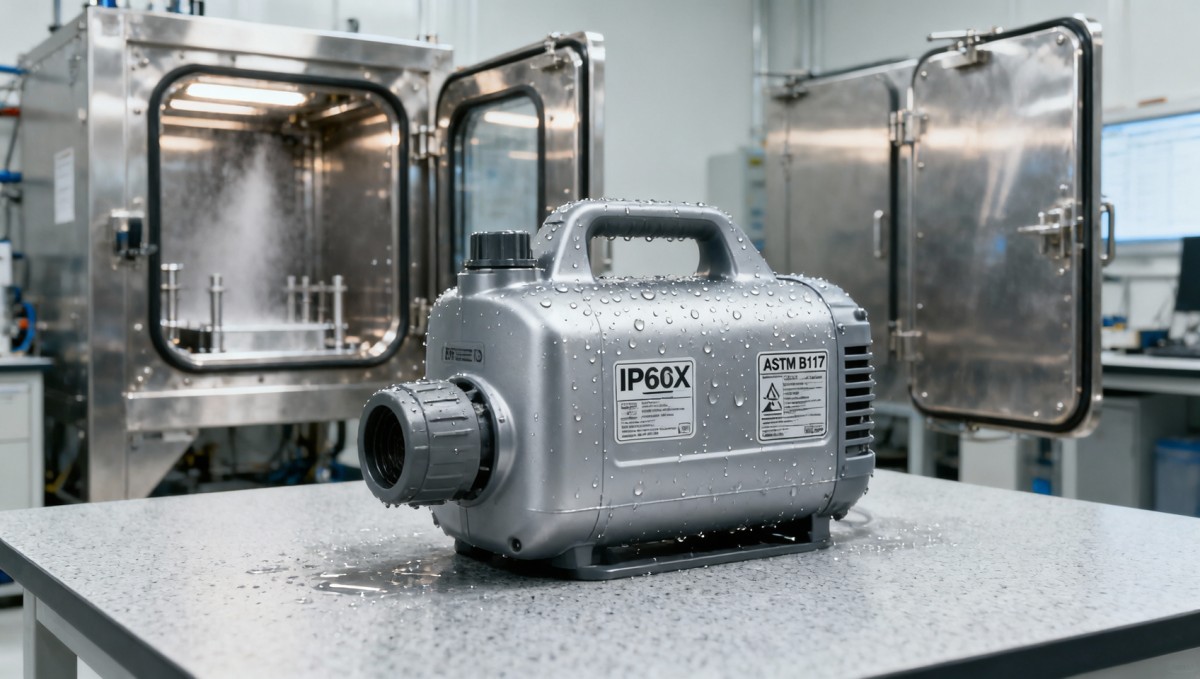
On April 27, 2026, Vietnam’s Ministry of Industry and Trade (MOIT) issued a temporary notice suspending the approval of import licenses for products under the Camping & Water category—specifically inflatable water pumps and portable pumps—pending compliance with mandatory IP6X dustproof rating and 500-hour neutral salt spray testing (ASTM B117). This development directly affects exporters, importers, and supply chain stakeholders serving the Vietnamese outdoor, recreation, and water equipment markets.
Event Overview
On April 27, 2026, the Ministry of Industry and Trade of Vietnam (MOIT) published an official temporary notice announcing the immediate suspension of import license approvals for all inflatable water pumps and portable pumps classified under the Camping & Water product category. The notice requires applicants to submit test reports verifying compliance with both IP6X ingress protection (dust-tight) and 500-hour neutral salt fog testing per ASTM B117, conducted at laboratories accredited and physically located in Vietnam. Licenses approved prior to this date remain valid; however, new orders are subject to extended lead times of 3–4 weeks. Some Chinese exporters have begun engaging Vietnamese local laboratories for pre-submission verification.
Industries Affected by Segment
Direct Exporters and Importers
These entities face immediate operational impact as import license issuance is halted. Since licensing is a prerequisite for customs clearance, shipments scheduled for Q2 2026 delivery may be delayed unless updated documentation—including Vietnam-based lab reports—is submitted. The requirement effectively shifts testing responsibility from origin-country labs to Vietnamese-accredited facilities, increasing time and cost per SKU.
Manufacturers and OEM/ODM Producers
Producers supplying inflatable or portable water pumps to Vietnamese-bound channels must now ensure their designs meet IP6X and salt fog durability standards—not just functional performance. Products previously certified only to IPX4 or IPX7 (water resistance only) may require redesign or revalidation. Batch-level testing may also be needed if historical production lacks traceable salt fog data.
Supply Chain and Logistics Service Providers
Freight forwarders, customs brokers, and bonded warehouse operators handling Camping & Water goods destined for Vietnam report increased client inquiries about documentation readiness and revised transit timelines. Delays in license issuance translate directly into container dwell time extensions, storage cost accruals, and potential demurrage charges—especially for air- or express-freighted consignments.
Distribution and Retail Channel Operators
Importers operating retail or e-commerce platforms in Vietnam may experience inventory shortfalls for key seasonal items (e.g., camping season inflatables, pool maintenance pumps) if replenishment orders placed after April 27 lack compliant certifications. Shelf-ready stock arriving without valid post-suspension licenses cannot legally enter circulation—even if physically present in-country.
What Enterprises Should Monitor and Do Now
Track MOIT’s official updates and possible phased implementation
The notice is labeled “temporary,” and no sunset date or revision timeline has been published. Enterprises should monitor MOIT’s official portal and Vietnam National Agency for Technical Regulation (NATR) bulletins for clarifications—such as whether grandfathering applies to pending applications, or whether transitional periods will be granted for high-volume SKUs.
Verify which specific models and SKUs fall under the scope
The notice references “inflatable water pumps” and “portable pumps” under Camping & Water—but does not publish an exhaustive HS code list or technical definition. Companies should cross-check product classifications against MOIT’s 2025 Product Classification Annex for Import Licensing (Decision No. 2288/QD-BCT), especially codes under Chapter 8413 and 8414, and confirm applicability with licensed customs consultants.
Engage Vietnamese-accredited labs early—not just for testing, but for reporting format alignment
Testing itself is only half the requirement: reports must follow Vietnam’s prescribed template (Circular 12/2022/TT-BKHCN), including bilingual labeling, lab accreditation ID, and signature by a Vietnamese-certified testing engineer. Pre-submission consultation with labs such as QUATEST 3 or Vinacontrol CE is advised to avoid rejection due to formatting noncompliance.
Review purchase orders and incoterms for liability allocation
For contracts executed before April 27 but fulfilled after, review force majeure clauses and incoterms (e.g., DAP Hanoi vs. FOB Shenzhen) to clarify who bears added testing costs, delays, or customs penalties. Suppliers may need to renegotiate terms where certification obligations were previously undefined.
Editorial Perspective / Industry Observation
Observably, this measure signals a tightening of conformity assessment enforcement—not a new regulatory standard. IP6X and ASTM B117 have long existed in Vietnam’s technical regulation framework (QCVN 101:2021/BKHCN), but enforcement was historically selective. The abrupt suspension suggests MOIT is prioritizing risk-based oversight of products exposed to humid, saline environments—particularly those used outdoors or near seawater. Analysis shows this is less a product ban and more a procedural gate: it tests whether exporters can align with Vietnam’s growing preference for locally verified, context-relevant compliance—rather than accepting foreign lab reports at face value. From an industry perspective, it reflects a broader regional trend toward localized conformity infrastructure, especially in ASEAN markets upgrading technical regulatory capacity.
Conclusion
This notice does not introduce new safety requirements, but significantly raises the operational bar for market access. It underscores that regulatory readiness now includes logistical coordination with in-country testing infrastructure—not just technical compliance. For businesses active in Vietnam’s outdoor and water equipment trade, the current priority is not speculation about policy reversal, but systematic verification of SKU eligibility, lab engagement, and contractual clarity. It is better understood as a process recalibration than a market restriction.
Information Sources
Main source: Official temporary notice published by Vietnam Ministry of Industry and Trade (MOIT), dated April 27, 2026.
Note: MOIT has not yet released a formal Q&A document or updated guidance on transition rules; this remains under observation.
Related Intelligence
") Skincare OEMApr 30, 2026FDA Adds New INCI Code for Plant Stem Cell Extracts (PSC-2026)FDA's new PSC-2026 INCI code for plant stem cell extracts demands strict documentation—get compliant fast to avoid U.S. shipment delays.
Skincare OEMApr 30, 2026FDA Adds New INCI Code for Plant Stem Cell Extracts (PSC-2026)FDA's new PSC-2026 INCI code for plant stem cell extracts demands strict documentation—get compliant fast to avoid U.S. shipment delays. Electronic & RC ToysApr 30, 2026RC Toy Orders Shift to South China Cluster, Lead Time Cuts to 6 WeeksRC toy orders are shifting to South China’s Dongguan–Shenzhen–Zhongshan cluster—lead times slashed to 6 weeks. Discover how exporters, suppliers & logistics players can adapt now.
 Cosmetics & PkgApr 30, 2026SASO Updates Cosmetics Packaging Rules for Plant ExtractsSASO updates cosmetics packaging rules for plant extracts—mandatory migration & light stability testing from Oct 1, 2026. Act now to avoid delays!
 Corporate & Seasonal GiftsApr 30, 2026Germany UBA Launches Mandatory Carbon Labelling Pilot for Corporate Gift InksGermany UBA's new Carbon Labelling Pilot mandates verified ink carbon footprints for corporate gifts—key for Chinese exporters & B2B gifting suppliers entering Germany.
 Fitness EquipmentApr 30, 2026THE Alliance Cuts Shanghai–LA Capacity Again: Fitness Equipment Shipment Delays to 8–10 WeeksFitness equipment shipment delays hit 8–10 weeks as THE Alliance cuts Shanghai–LA capacity by 22%. Urgent insights for exporters, forwarders & U.S. importers.
 Camping & WaterApr 30, 2026Vietnam MOIT Suspends Import Licenses for Camping & Water PumpsVietnam MOIT suspends import licenses for camping & water pumps—IP6X and ASTM B117 compliance now mandatory. Act now to avoid delays.
 Smart Pet DevicesApr 30, 2026Japan METI Adds Smart Cat Litter Machines to PSE Fast-Track ListSmart cat litter machines now qualify for Japan's PSE fast-track certification — just 7 days for Chinese-made units with auto-cleaning, APP control & biological sensing.
 STEM & Educational ToysApr 30, 2026CPSC Tightens STEM Toy Battery Compartment StandardsCPSC Tightens STEM Toy Battery Compartment Standards: New ASTM F963-26 Annex D2 test mandates dynamic pressure + vibration compliance by July 1, 2026—act now to avoid shipment rejections.
 Infant Feeding & CareApr 30, 2026RCEP Launches Infant Feeding Fast Track for China NMPA Class II ProductsRCEP Infant Feeding Fast Track now live: China NMPA Class II products skip redundant testing in 5 ASEAN markets — faster certification, 40%+ cost savings.
 Beauty DevicesApr 30, 2026EU EPR Rules Take Effect for Beauty & Baby Monitors on Apr 29, 2026EU EPR rules for beauty & baby monitors take effect Apr 29, 2026 — mandatory registration, fees & compliance for exporters. Act now to avoid customs delays & marketplace deactivation.
 2026/789 on Beauty Device Packaging Takes Effect") Beauty DevicesApr 29, 2026EU Regulation (EU) 2026/789 on Beauty Device Packaging Takes EffectEU Regulation (EU) 2026/789 mandates 30% recycled plastic & LCA declarations for beauty device packaging — act now to avoid Amazon.de/fr rejections!
Beauty DevicesApr 29, 2026EU Regulation (EU) 2026/789 on Beauty Device Packaging Takes EffectEU Regulation (EU) 2026/789 mandates 30% recycled plastic & LCA declarations for beauty device packaging — act now to avoid Amazon.de/fr rejections! Electronic & RC ToysApr 29, 2026ICTA: RC Toy Orders Shift to South China, Lead Time Cuts to 6 WeeksICTA reports RC toy orders shifting to South China—78% now flow to Guangdong’s cluster, cutting lead times to just 6 weeks. Act now to optimize sourcing, compliance & logistics.
 STEM & Educational ToysApr 29, 2026CPSC Nanomaterial Migration Rule for STEM Toys Effective Q3 2026CPSC Nanomaterial Migration Rule for STEM Toys: New ASTM F963–24 testing (≤0.05 mg/cm²/h) mandatory from Oct 1, 2026—avoid detention & recalls.