Retail data signals shaping demand for educational toy kits
Retail data is redefining how buyers evaluate educational toy kits, from demand shifts and international retail trends to product safety standards and product regulations. For sourcing teams, distributors, and decision-makers, this retail analysis combines supply chain research, brand supply priorities, and international supply signals to reveal where growth, compliance, and competitive advantage are emerging.
How retail demand signals are influencing educational toy kit decisions in travel retail
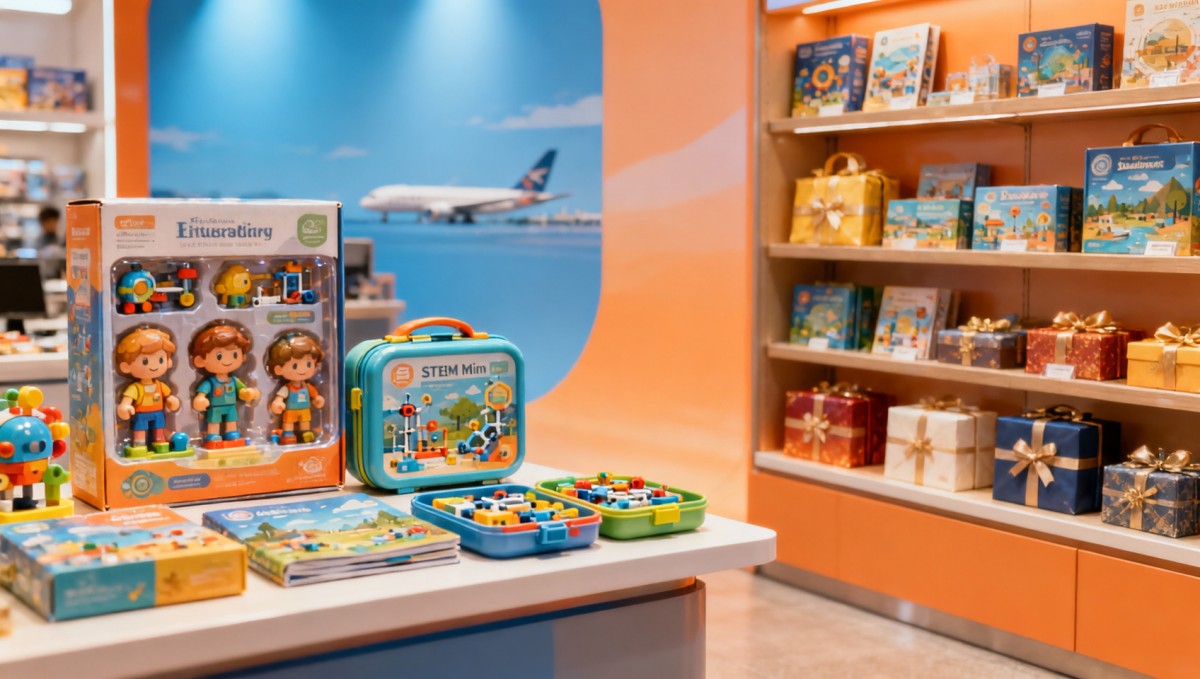
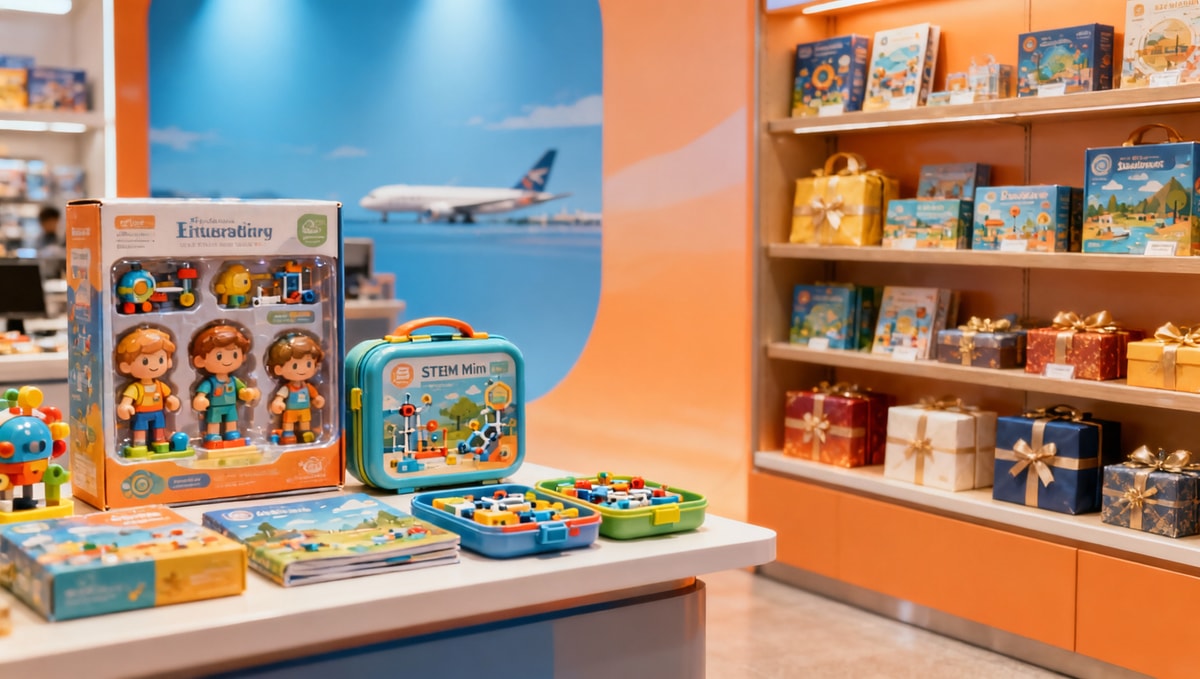
In the travel service sector, educational toy kits are no longer treated as generic souvenir items. Airports, family resorts, cruise retail corners, museum-linked travel stores, and destination gift shops now use retail data to identify which products can engage children during transit, extend destination learning, and support higher basket value. For buyers, the key question is not only what sells, but what fits short decision windows, compact travel packaging, and destination-specific merchandising.
Retail data signals usually appear in 3 practical layers: sell-through speed, age-group demand, and compliance readiness. A travel retailer may only have a 7–21 day seasonal sales window tied to school holidays, regional festivals, or inbound tourism peaks. That means educational toy kits with clear age labeling, fast shelf understanding, and low setup complexity often perform better than products requiring long demonstrations or bulky display fixtures.
For technical evaluators and project managers, the strongest signals often come from repeat-purchase environments. If a family attraction store sees stable weekly movement in STEM, craft, and language-learning kits, it indicates that the category is not purely impulse-driven. It has destination relevance. In tourism settings, this matters because the product must connect education with travel memory, such as local wildlife themes, map-based discovery, or culture-inspired activity kits.
Global Consumer Sourcing helps buyers decode these shifts by connecting retail demand signals with sourcing feasibility. Instead of looking only at trend headlines, procurement teams need to compare minimum order quantity, packaging adaptability, certification pathways, and supply continuity across peak travel periods. This is especially useful when brands or distributors must decide within 2–4 weeks whether to launch a destination-specific educational toy kit program.
Why travel retail behaves differently from mainstream toy channels
Travel retail compresses the buying journey. Parents often have less than 10 minutes to decide. Store staff may not have time for product explanation. As a result, demand signals favor kits that communicate value in 5 seconds: visible learning outcome, clear age range, and travel-friendly contents. This is different from e-commerce, where detailed product pages can do more educational work before the purchase.
Commercial reviewers and finance approvers also evaluate educational toy kits differently in tourism service channels. The product is expected to serve at least 2 functions: generate retail margin and improve guest satisfaction. A well-matched kit can reduce boredom during waiting time, support family-friendly brand positioning, and create destination recall after the trip. That broader value is why retail demand analysis in travel environments requires more than sales ranking alone.
- Family travel venues often prioritize compact formats that fit cabin luggage, day bags, or hotel room use.
- Operators need products with simple replenishment, low breakage risk, and easy display reset during daily store turnover.
- Distributors prefer product lines that can be localized in 2–3 packaging versions without changing the core kit structure.
What buyers should compare when selecting educational toy kits for tourism channels
Selection becomes difficult when multiple departments judge the same product from different angles. Operations teams focus on display and handling. Quality managers focus on material safety and age grading. Commercial teams look at margin, replenishment rhythm, and destination fit. To reduce internal friction, buyers should use a shared comparison framework before sample approval, especially when the launch window is under 30 days.
The table below compares common educational toy kit types used in travel-related retail environments. It is designed for procurement teams, distributors, and business decision-makers who need a fast way to assess portability, usage context, and retail suitability without relying on vague product descriptions.
This comparison shows why retail data signals should be matched with operational context. A kit can perform well online yet fail in airport retail because the packaging is too large, the product story is not visible, or the age guidance is unclear. In tourism channels, high-performing educational toy kits usually combine low handling friction with immediate gifting appeal.
A practical 5-point selection screen
Before issuing a trial purchase order, cross-functional teams should review 5 core points: travel portability, shelf communication, compliance pathway, replenishment speed, and destination relevance. This prevents a common problem where the commercial team approves a fast seller, but the product later stalls because packing dimensions, labeling, or local language requirements were not considered during initial review.
- Confirm if the kit can fit standard tourism retail display depths and storage areas without repacking.
- Check whether the learning value can be understood from the front panel in under 5–8 seconds.
- Review target market regulations and whether supporting test documents are available before shipment booking.
- Assess if the supplier can support small, medium, and scaled replenishment batches over a 1–2 season cycle.
- Evaluate if the content aligns with the destination story, family demographic, and channel price band.
For project leads and distributors, this kind of structured decision model reduces slow approvals and improves category planning. It also helps finance teams compare proposals based on measurable factors rather than supplier claims alone.
Compliance, product safety, and documentation: where many launches slow down
Educational toy kits often cross several risk areas at once: children’s product safety, labeling requirements, material restrictions, and packaging claims. In travel service retail, these issues become more visible because the product may be sold across multiple jurisdictions or passed through airport, cruise, or bonded retail systems. A sourcing decision that looks simple at the merchandising stage can become expensive if documents are incomplete during shipment or customs review.
Quality control personnel and safety managers should treat compliance review as an early-stage gate, not a final-stage formality. As a practical timeline, teams should start document checks at least 2–6 weeks before planned order confirmation, especially if the kit contains inks, coatings, adhesives, magnets, batteries, or small detachable parts. Even for low-complexity educational toy kits, missing declarations can delay channel onboarding.
The next table summarizes common compliance checkpoints that buyers frequently review when sourcing educational toy kits for international tourism channels. The exact requirement depends on destination market, age grading, and product construction, so the table should be used as a planning guide rather than a one-size-fits-all checklist.
For business evaluators, the key lesson is that compliance affects margin, launch timing, and return risk at the same time. A lower unit price may not be the better option if additional relabeling, retesting, or document chasing adds 2–3 weeks to the rollout.
How GCS supports compliance-aware sourcing decisions
GCS adds value by connecting retail trend signals with sourcing discipline. Instead of reviewing demand, safety, and supply risk in separate workflows, buyers can align category planning with manufacturing capability, packaging adaptation, and document preparedness. This helps teams avoid a frequent travel retail mistake: selecting products because they look seasonal or educational, but discovering too late that they are difficult to certify or scale for international supply.
For OEM and ODM evaluation, this means looking beyond aesthetics. Buyers should examine whether the supplier can maintain version control across multilingual packaging, provide document packs in a reasonable lead time, and support sample iterations within a 10–20 business day window. These details are often decisive in destination-led retail programs.
Procurement planning: lead time, cost control, and alternative sourcing paths
In tourism service channels, procurement planning is highly sensitive to seasonality. A late order can miss school breaks, summer travel peaks, or festive travel periods. That is why educational toy kit procurement should be managed as a staged process, not a last-minute product fill. Typical stages include concept screening, compliance review, sample approval, and shipment scheduling. Depending on complexity, this can take 4–10 weeks from shortlisting to ready-to-ship status.
Cost control also needs a broader lens than unit price. Distributors and finance approvers should compare packing efficiency, damage rates, language customization costs, and replenishment flexibility. A low-cost kit may consume more shelf space, require secondary packaging, or generate higher return rates if the contents are messy or difficult to use in hotel or transit environments. In travel retail, the real cost per sale is shaped by both logistics and guest experience.
Common sourcing paths and when to use them
There are usually 3 practical sourcing paths for educational toy kits in tourism channels. First is direct import of standard kits, which works for fast tests and lower complexity. Second is semi-custom packaging, which suits distributors needing destination names, local language, or retail-exclusive sleeves. Third is fully customized destination content, often used by museums, heritage routes, and family resorts that want stronger storytelling value.
The right path depends on order horizon, budget, and launch purpose. If a travel operator is testing one season across 5–20 stores, semi-custom can often balance speed and brand fit. If the goal is a flagship destination program running for 6–12 months, custom educational content may create better differentiation, provided compliance and approval timelines are built in early.
- Standard kit sourcing is usually suitable for urgent launches, limited trial volume, and lower development burden.
- Semi-custom programs work well when buyers need local language adaptation, seasonal sleeves, or co-branded inserts.
- Full customization is best for signature destinations, educational partnerships, and premium family travel positioning.
Budget evaluation beyond the invoice
A disciplined cost review should include at least 4 layers: ex-factory cost, packaging adaptation, compliance preparation, and operational handling. For example, a kit with 20 small components may create higher counting and repacking time at destination facilities than a sealed 6-piece format. Likewise, a product requiring translated inserts for 3 markets may add artwork cycles and approval delays that affect working capital planning.
This is where retail intelligence and sourcing intelligence need to work together. GCS helps buyers compare not only what is trending, but what is realistically executable within budget and calendar constraints. That is especially useful for enterprise decision-makers managing multiple regions, channel partners, and seasonal launch calendars.
FAQ and decision checkpoints for distributors, operators, and enterprise buyers
Teams often ask similar questions when reviewing educational toy kits for travel retail, hotel retail, or destination gift programs. The questions below address common uncertainty points that affect approvals, supplier comparison, and rollout timing. They are especially relevant when technical, commercial, and quality teams need one shared view before placing sample or production orders.
How do we know if an educational toy kit fits a tourism scenario?
Start with 3 filters: travel portability, destination relevance, and time-to-understand. If the kit can be used in a hotel room, airport waiting area, cruise cabin, or family lounge without extra tools, it is more likely to fit. If the story links to geography, wildlife, local culture, or hands-on learning, it gains stronger tourism relevance. If the front pack explains the benefit in under 10 seconds, it is easier to sell in high-traffic travel environments.
What should buyers focus on during sample review?
Review at least 6 items: packaging strength, loose-part control, age labeling clarity, instruction readability, display footprint, and post-use mess level. In travel service settings, sample review should also include a practical simulation. Ask whether a parent can understand setup quickly, whether hotel or store staff can restock it easily, and whether the kit remains intact after repeated handling during a 7-day merchandising cycle.
How long is the usual lead time?
There is no single universal lead time, but a common working range is 4–10 weeks from shortlist to shipment readiness, depending on stock status, customization level, and document preparation. Standard items move faster. Packaging changes, multilingual inserts, or destination-specific educational content will usually extend the cycle. Buyers should add extra buffer before school holiday peaks, cruise season launches, or regional tourism festivals.
What are the most common sourcing mistakes?
The most frequent mistakes are choosing by trend alone, underestimating compliance preparation, and ignoring travel-use conditions. A product can look attractive in a catalog but perform poorly if parts get lost easily, instructions are too complex, or packaging is not suited for compact shelves. Another common error is approving a supplier before checking whether they can support version control, documentation updates, and replenishment across multiple tourism channels.
Why work with GCS when evaluating retail data signals and sourcing options
For travel service buyers and retail partners, the challenge is rarely finding more products. The challenge is identifying educational toy kits that match demand signals, operational reality, and compliance expectations at the same time. GCS supports that process by connecting market insight with practical sourcing judgment across gifts and toys, private-label opportunities, international supply patterns, and risk-aware supplier evaluation.
This is useful for information researchers building category maps, for technical evaluators reviewing product suitability, and for business decision-makers balancing margin with launch speed. It also matters to quality managers who need early visibility into certification pathways and documentation readiness, especially when the product will move through cross-border or multi-channel travel retail systems.
If your team is assessing educational toy kits for airport retail, destination stores, hotel family programs, museum-linked travel retail, or distributor portfolios, the most productive next step is a structured consultation. You can discuss 5 key areas: product selection, packaging adaptation, lead-time planning, certification and labeling expectations, and sample support strategy. That gives every stakeholder—from procurement and QC to finance and project management—a clearer basis for approval.
Contact GCS to review demand signals, compare sourcing paths, confirm documentation priorities, and shortlist educational toy kits that fit your tourism channel goals. Whether you need a fast test program, a destination-specific retail concept, or a multi-market sourcing roadmap, the discussion can focus on concrete points such as MOQ range, sampling timeline, packaging options, compliance checkpoints, and quotation structure.
Related Intelligence
") Skincare OEMApr 30, 2026FDA Adds New INCI Code for Plant Stem Cell Extracts (PSC-2026)FDA's new PSC-2026 INCI code for plant stem cell extracts demands strict documentation—get compliant fast to avoid U.S. shipment delays.
Skincare OEMApr 30, 2026FDA Adds New INCI Code for Plant Stem Cell Extracts (PSC-2026)FDA's new PSC-2026 INCI code for plant stem cell extracts demands strict documentation—get compliant fast to avoid U.S. shipment delays. Electronic & RC ToysApr 30, 2026RC Toy Orders Shift to South China Cluster, Lead Time Cuts to 6 WeeksRC toy orders are shifting to South China’s Dongguan–Shenzhen–Zhongshan cluster—lead times slashed to 6 weeks. Discover how exporters, suppliers & logistics players can adapt now.
 Cosmetics & PkgApr 30, 2026SASO Updates Cosmetics Packaging Rules for Plant ExtractsSASO updates cosmetics packaging rules for plant extracts—mandatory migration & light stability testing from Oct 1, 2026. Act now to avoid delays!
 Corporate & Seasonal GiftsApr 30, 2026Germany UBA Launches Mandatory Carbon Labelling Pilot for Corporate Gift InksGermany UBA's new Carbon Labelling Pilot mandates verified ink carbon footprints for corporate gifts—key for Chinese exporters & B2B gifting suppliers entering Germany.
 Fitness EquipmentApr 30, 2026THE Alliance Cuts Shanghai–LA Capacity Again: Fitness Equipment Shipment Delays to 8–10 WeeksFitness equipment shipment delays hit 8–10 weeks as THE Alliance cuts Shanghai–LA capacity by 22%. Urgent insights for exporters, forwarders & U.S. importers.
 Camping & WaterApr 30, 2026Vietnam MOIT Suspends Import Licenses for Camping & Water PumpsVietnam MOIT suspends import licenses for camping & water pumps—IP6X and ASTM B117 compliance now mandatory. Act now to avoid delays.
 Smart Pet DevicesApr 30, 2026Japan METI Adds Smart Cat Litter Machines to PSE Fast-Track ListSmart cat litter machines now qualify for Japan's PSE fast-track certification — just 7 days for Chinese-made units with auto-cleaning, APP control & biological sensing.
 STEM & Educational ToysApr 30, 2026CPSC Tightens STEM Toy Battery Compartment StandardsCPSC Tightens STEM Toy Battery Compartment Standards: New ASTM F963-26 Annex D2 test mandates dynamic pressure + vibration compliance by July 1, 2026—act now to avoid shipment rejections.
 Infant Feeding & CareApr 30, 2026RCEP Launches Infant Feeding Fast Track for China NMPA Class II ProductsRCEP Infant Feeding Fast Track now live: China NMPA Class II products skip redundant testing in 5 ASEAN markets — faster certification, 40%+ cost savings.
 Beauty DevicesApr 30, 2026EU EPR Rules Take Effect for Beauty & Baby Monitors on Apr 29, 2026EU EPR rules for beauty & baby monitors take effect Apr 29, 2026 — mandatory registration, fees & compliance for exporters. Act now to avoid customs delays & marketplace deactivation.
 2026/789 on Beauty Device Packaging Takes Effect") Beauty DevicesApr 29, 2026EU Regulation (EU) 2026/789 on Beauty Device Packaging Takes EffectEU Regulation (EU) 2026/789 mandates 30% recycled plastic & LCA declarations for beauty device packaging — act now to avoid Amazon.de/fr rejections!
Beauty DevicesApr 29, 2026EU Regulation (EU) 2026/789 on Beauty Device Packaging Takes EffectEU Regulation (EU) 2026/789 mandates 30% recycled plastic & LCA declarations for beauty device packaging — act now to avoid Amazon.de/fr rejections! Electronic & RC ToysApr 29, 2026ICTA: RC Toy Orders Shift to South China, Lead Time Cuts to 6 WeeksICTA reports RC toy orders shifting to South China—78% now flow to Guangdong’s cluster, cutting lead times to just 6 weeks. Act now to optimize sourcing, compliance & logistics.
 STEM & Educational ToysApr 29, 2026CPSC Nanomaterial Migration Rule for STEM Toys Effective Q3 2026CPSC Nanomaterial Migration Rule for STEM Toys: New ASTM F963–24 testing (≤0.05 mg/cm²/h) mandatory from Oct 1, 2026—avoid detention & recalls.