Pet Hair Dryer Stand: Who Really Needs It?
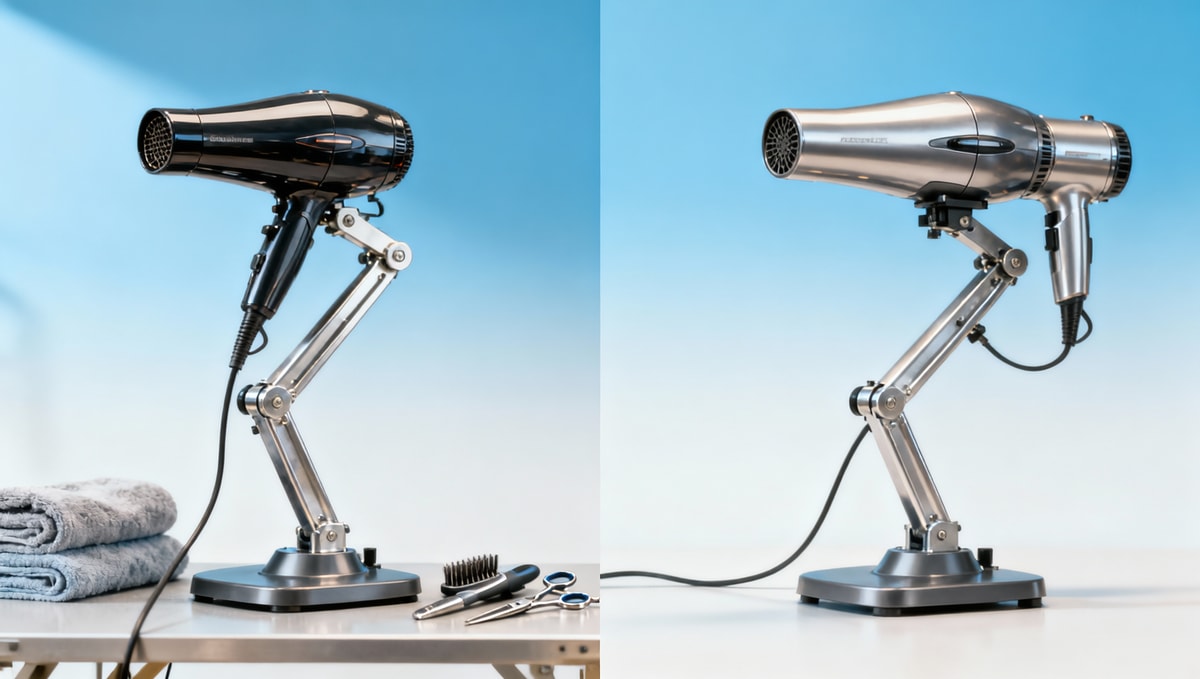
From grooming salons to mobile pet services and cross-border retail sourcing teams, the demand for a reliable pet hair dryer stand is growing fast. But who truly benefits most—and what should buyers evaluate before choosing one? In a market also shaped by pet private label trends, this guide helps operators, sourcing managers, and decision-makers assess real use cases, quality standards, and procurement value with confidence.
A pet hair dryer stand is not a must-have for every pet business. It creates the most value where drying is frequent, hands-free control matters, workflow speed affects revenue, and safety or consistency cannot be left to operator technique alone. For grooming salons, mobile groomers, veterinary recovery settings, pet boarding facilities, and brands sourcing grooming equipment for resale, the real question is less “Do we need one?” and more “Will the right model improve efficiency, handling safety, and total operating cost enough to justify the investment?”
Who really needs a pet hair dryer stand—and who may not?
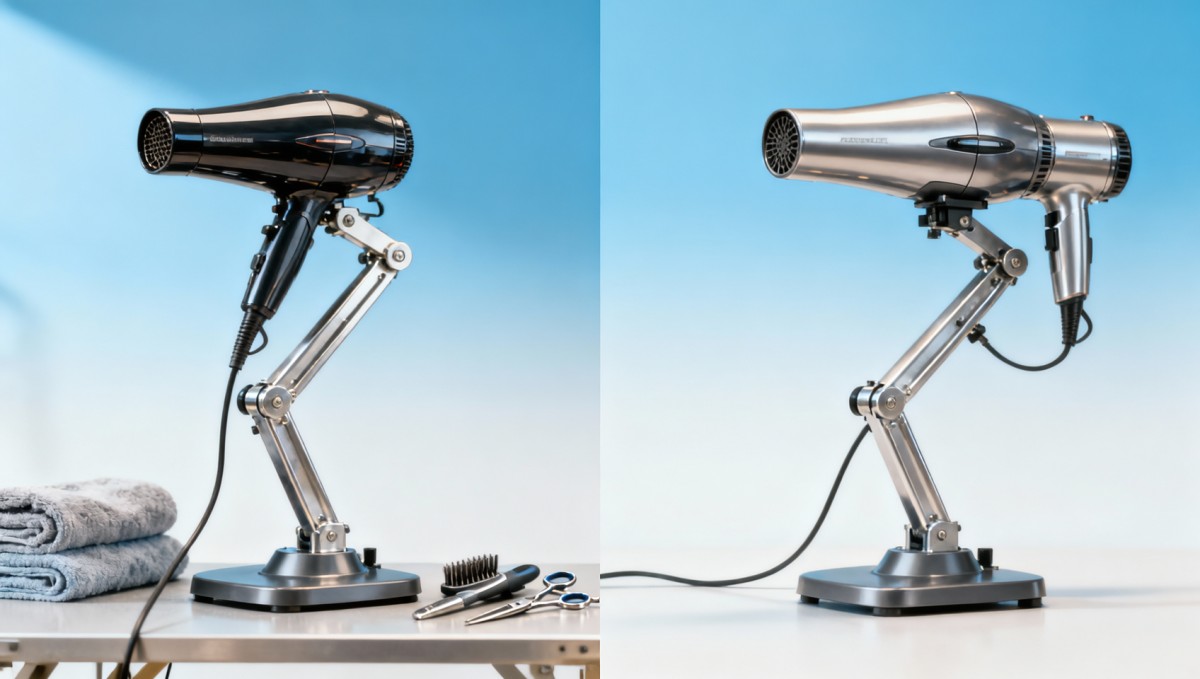
The strongest fit usually falls into five buyer groups:
- Professional grooming salons: Teams handling multiple pets per day benefit from hands-free drying, better coat finishing, and improved staff efficiency.
- Mobile pet grooming operators: In small workspaces, a stand helps stabilize airflow direction and reduces operator fatigue.
- Pet hospitals and specialty care providers: Controlled drying can support post-bath drying where gentle, predictable positioning is important.
- Boarding, daycare, and pet wellness centers: If drying is part of routine hygiene service, a stand can improve consistency across staff.
- Importers, distributors, and private label buyers: A dryer stand can be a practical category extension in the growing pet grooming equipment market.
Who may not need one? Low-volume home users, very small operations with limited service menus, or businesses that mostly towel-dry and only occasionally use forced-air drying may find the return less compelling. In those cases, a handheld dryer or integrated grooming station may be enough.
What problem does a dryer stand actually solve in daily operations?
Many buyers initially view a pet hair dryer stand as a simple accessory. In practice, it solves three operational problems that directly affect labor, animal handling, and service quality.
First, it reduces one-handed workflow limitations. Without a stand, staff often hold the dryer in one hand and manage the pet, brush, or coat with the other. That slows down drying and can reduce finish quality, especially on long-haired or double-coated breeds.
Second, it helps improve consistency. A stable stand allows more repeatable airflow positioning. This matters for grooming teams training new staff, multi-location businesses seeking standard procedures, and distributors evaluating product claims.
Third, it lowers fatigue. Repetitive handheld drying can strain wrists, shoulders, and upper back. Over time, that affects productivity and staff comfort. For businesses with high daily throughput, ergonomics is not a minor issue—it is a cost and retention issue.
Which users see the clearest return on investment?
For enterprise buyers and financial approvers, the value of a pet hair dryer stand is best judged by workload and process impact rather than product price alone.
The clearest ROI usually appears when:
- The team dries several pets per shift
- Staff regularly handle anxious, large, or thick-coated animals
- Service speed affects daily booking capacity
- Labor cost is high enough that time savings matter
- Operator fatigue or injury risk is already a concern
- The business is standardizing equipment across multiple sites
For distributors and sourcing teams, ROI may also include commercial factors such as category margin, repeat ordering potential, compatibility with existing dryers, and suitability for private label programs.
A practical procurement view is to estimate:
- Time saved per pet
- Improvement in service consistency
- Reduction in operator strain
- Potential increase in daily service capacity
- Lower replacement risk from poor-quality mounts or unstable bases
What should buyers evaluate before choosing a model?
This is where many purchasing mistakes happen. A dryer stand may look simple, but quality differences affect safety, durability, and user acceptance.
1. Stability and base design
A weak base creates tipping risk, especially in busy salons or mobile setups. Buyers should assess base width, center of gravity, caster quality, and anti-slip performance.
2. Arm flexibility and locking strength
The stand should hold position under real dryer weight and vibration. If joints sag during use, the stand becomes frustrating and unsafe.
3. Material quality and corrosion resistance
Stainless steel, coated metal, and high-grade polymers generally perform better in wet grooming environments. Evaluate welds, fasteners, and finish quality.
4. Dryer compatibility
Not all stands fit all dryer sizes, nozzles, or hose types. For sourcing teams, compatibility claims should be verified with measurement data, not only supplier promises.
5. Height and angle adjustability
Different breeds and table heights require flexible positioning. Good adjustability improves both drying performance and operator comfort.
6. Ease of cleaning and maintenance
Hair buildup, moisture exposure, and daily movement all test product durability. Simpler maintenance often means better long-term use.
7. Safety details
Check pinch points, sharp edges, cable management, heat exposure areas, and movement security. Safety managers should also review whether the design introduces handling hazards.
What quality, compliance, and sourcing risks matter for B2B buyers?
For importers, distributors, and private label programs, the product itself is only part of the decision. Supplier capability and compliance discipline matter just as much.
Key checkpoints include:
- Load-bearing and durability testing: Ask how the supplier verifies arm strength, locking performance, and rolling durability.
- Material declarations: Confirm material grade, surface treatment, and resistance to rust or cleaning chemicals.
- Factory consistency: Review QC procedures for joints, welds, threaded parts, and packaging protection.
- Certifications where applicable: While a stand itself may not require the same electrical certifications as powered devices, associated packaging, labeling, and market-entry requirements still need review.
- OEM/ODM readiness: For private label buyers, assess logo options, carton customization, instruction manuals, spare parts support, and MOQ flexibility.
If the dryer stand is sold as part of a bundled pet grooming solution, compliance review becomes broader. Procurement and quality teams should evaluate the complete sellable unit, not only the stand component.
How does this product fit current pet market and retail trends?
The pet economy continues to reward products that improve convenience, grooming quality, and professional-grade care at scale. That makes the pet hair dryer stand more relevant than it may appear at first glance.
Three trends are driving interest:
- Professionalization of pet services: More operators want tools that support faster, cleaner, more controlled workflows.
- Private label growth: Retailers and online sellers are expanding into niche grooming accessories with strong add-on sales potential.
- Demand for ergonomic and safety-minded equipment: Buyers increasingly care about operator comfort and safer pet handling, not just basic function.
For distributors and category managers, this means the product can work well as part of a broader grooming equipment assortment, especially when paired with dryers, tables, brushes, and salon accessories.
How should different decision-makers judge whether to buy?
Operators and users should focus on ease of adjustment, real stability, and whether the stand genuinely improves drying control.
Technical evaluators should inspect structure, moving joints, compatibility tolerance, and expected lifespan under repeated use.
Procurement teams should compare not just unit price, but warranty terms, spare parts availability, packaging efficiency, MOQ, and supplier responsiveness.
Quality and safety personnel should verify mechanical stability, edge finishing, safe movement, and suitability for wet working environments.
Business decision-makers and finance approvers should ask a simpler question: will this equipment improve throughput, service quality, or category profitability enough to justify standardization or stocking?
Final verdict: when is a pet hair dryer stand worth it?
A pet hair dryer stand is worth buying when drying is a repeated, labor-sensitive task and when workflow consistency, staff ergonomics, or service quality directly affect business performance. It is especially useful for grooming salons, mobile grooming services, pet care facilities, and B2B buyers building a professional pet grooming product line.
It is less essential for low-frequency use cases or buyers who do not gain meaningful time, safety, or handling benefits from hands-free drying.
For serious buyers, the best decision comes from evaluating fit-for-use conditions: daily workload, compatibility, stability, durability, supplier reliability, and total value over time. In short, the right pet hair dryer stand is not just an accessory—it can be a practical efficiency tool, a safer workflow upgrade, and, for retail sourcing teams, a commercially relevant product in a growing pet care market.
Related Intelligence
") Skincare OEMApr 30, 2026FDA Adds New INCI Code for Plant Stem Cell Extracts (PSC-2026)FDA's new PSC-2026 INCI code for plant stem cell extracts demands strict documentation—get compliant fast to avoid U.S. shipment delays.
Skincare OEMApr 30, 2026FDA Adds New INCI Code for Plant Stem Cell Extracts (PSC-2026)FDA's new PSC-2026 INCI code for plant stem cell extracts demands strict documentation—get compliant fast to avoid U.S. shipment delays. Electronic & RC ToysApr 30, 2026RC Toy Orders Shift to South China Cluster, Lead Time Cuts to 6 WeeksRC toy orders are shifting to South China’s Dongguan–Shenzhen–Zhongshan cluster—lead times slashed to 6 weeks. Discover how exporters, suppliers & logistics players can adapt now.
 Cosmetics & PkgApr 30, 2026SASO Updates Cosmetics Packaging Rules for Plant ExtractsSASO updates cosmetics packaging rules for plant extracts—mandatory migration & light stability testing from Oct 1, 2026. Act now to avoid delays!
 Corporate & Seasonal GiftsApr 30, 2026Germany UBA Launches Mandatory Carbon Labelling Pilot for Corporate Gift InksGermany UBA's new Carbon Labelling Pilot mandates verified ink carbon footprints for corporate gifts—key for Chinese exporters & B2B gifting suppliers entering Germany.
 Fitness EquipmentApr 30, 2026THE Alliance Cuts Shanghai–LA Capacity Again: Fitness Equipment Shipment Delays to 8–10 WeeksFitness equipment shipment delays hit 8–10 weeks as THE Alliance cuts Shanghai–LA capacity by 22%. Urgent insights for exporters, forwarders & U.S. importers.
 Camping & WaterApr 30, 2026Vietnam MOIT Suspends Import Licenses for Camping & Water PumpsVietnam MOIT suspends import licenses for camping & water pumps—IP6X and ASTM B117 compliance now mandatory. Act now to avoid delays.
 Smart Pet DevicesApr 30, 2026Japan METI Adds Smart Cat Litter Machines to PSE Fast-Track ListSmart cat litter machines now qualify for Japan's PSE fast-track certification — just 7 days for Chinese-made units with auto-cleaning, APP control & biological sensing.
 STEM & Educational ToysApr 30, 2026CPSC Tightens STEM Toy Battery Compartment StandardsCPSC Tightens STEM Toy Battery Compartment Standards: New ASTM F963-26 Annex D2 test mandates dynamic pressure + vibration compliance by July 1, 2026—act now to avoid shipment rejections.
 Infant Feeding & CareApr 30, 2026RCEP Launches Infant Feeding Fast Track for China NMPA Class II ProductsRCEP Infant Feeding Fast Track now live: China NMPA Class II products skip redundant testing in 5 ASEAN markets — faster certification, 40%+ cost savings.
 Beauty DevicesApr 30, 2026EU EPR Rules Take Effect for Beauty & Baby Monitors on Apr 29, 2026EU EPR rules for beauty & baby monitors take effect Apr 29, 2026 — mandatory registration, fees & compliance for exporters. Act now to avoid customs delays & marketplace deactivation.
 2026/789 on Beauty Device Packaging Takes Effect") Beauty DevicesApr 29, 2026EU Regulation (EU) 2026/789 on Beauty Device Packaging Takes EffectEU Regulation (EU) 2026/789 mandates 30% recycled plastic & LCA declarations for beauty device packaging — act now to avoid Amazon.de/fr rejections!
Beauty DevicesApr 29, 2026EU Regulation (EU) 2026/789 on Beauty Device Packaging Takes EffectEU Regulation (EU) 2026/789 mandates 30% recycled plastic & LCA declarations for beauty device packaging — act now to avoid Amazon.de/fr rejections! Electronic & RC ToysApr 29, 2026ICTA: RC Toy Orders Shift to South China, Lead Time Cuts to 6 WeeksICTA reports RC toy orders shifting to South China—78% now flow to Guangdong’s cluster, cutting lead times to just 6 weeks. Act now to optimize sourcing, compliance & logistics.
 STEM & Educational ToysApr 29, 2026CPSC Nanomaterial Migration Rule for STEM Toys Effective Q3 2026CPSC Nanomaterial Migration Rule for STEM Toys: New ASTM F963–24 testing (≤0.05 mg/cm²/h) mandatory from Oct 1, 2026—avoid detention & recalls.